Pages

Showing posts with label OSHA. Show all posts

Saturday, January 28, 2012

OSHA Combustible Dust National Emphasis Program (NEP) a Dismal Failure

"Assistant Labor Secretary Jordan Barab says he believes it's too early to assess the effectiveness of the program." Too early to assess? So how many more catastrophes like Hoeganaes must occur before we figure out the Combustible Dust National Emphasis Program (NEP) is a dismal failure?

Since 2008, through researching media accounts of combustible dust related fires and explosions the Combustible Dust Policy Institute has determined that over 50% of incidents are occurring in specific industries (NAICS) not recognized in the OSHA ComDust NEP.

Subsequently, the CSB Hoeganaes Case Study recommendation "Revise the Combustible Dust National Emphasis Program (NEP) to add industry codes for facilities that generate metal dusts(e.g., North American Industrial Classification System, NAICS, code 331111 Iron and Steel Mills, and other applicable codes not currently listed)," is only the tip of the iceberg.

What about the dozens of other industries throughout the entire manufacturing and non-manufacturing sectors not recognized in the NEP having a history of combustible dust incidents? Let’s stop fooling around and attempting to segment specific industries while Rome is burning. If you have combustible dust at your facility then it does not matter what you’re NAICS specific industry classification is.

As retired University of Michigan Professor of Aeronautical Engineering Bill Kauffman stated in the article, "It's not rocket science," If you don't believe it then check for yourself in the next news account of a combustible dust related incident where the specific industry (NAICS) is not recognized in the ComDust NEP. If this isn't a failure then I don't know what is.

Thursday, January 26, 2012

Full Report: Explosion of DeBruce Grain Elevator, Wichita, Kansas; June 8, 1998

Excellent overview on how a combustible dust explosion is investigated. Includes many educational pictures with comments in APPENDICE A Scientific basis for the analysis of the explosion

Grain Elevator Explosion Investigation Team (GEEIT), Vernon L. Grose, D.Sc., Editor
Report Placed in Final Electronic Format By David K. McDonnell of OSHA in Cooperation with GEEIT

Special thanks to Dr.Bill Kauffman, for sharing the DeBruce report. Viewers will find chapters absent from the initial OSHA web page regarding the DeBruce Grain Elevator Explosion - Report in the section below

Chapter 1, Chapter 2, Chapter 3, Chapter 8, Chapter 14, initial OSHA web page

Cover

https://docs.google.com/open?id=0Bw8dBi76LJibYjMwZjg5MDgtZDdkNC00YzM0LWE2NTItYmIwNWViOGJhY2Ez

Cover inside

https://docs.google.com/document/d/15JyKtxN5C8ztmkhp4GtgGnppwvRwlzBwmFAWuDdjF0Q/edit

Report Table of Contents

https://docs.google.com/document/d/1Q1tynPH2_SSqPJN6akZAl5f21-5-w1ON8zV3EoKP3sk/edit

List of Figures in the Report

https://docs.google.com/document/d/1jA6z5ayoMDRy2JfGXvFXIlRuXRojaP9xGbz_5dOs1HA/edit

Chap 4 DeBRUCE MANAGEMENT ROLE IN EXPLOSION

https://docs.google.com/open?id=0Bw8dBi76LJibZDM3ZGI0NTgtNjA5Yi00NTc1LTk2ZmEtNjczMGRmMjdhNjI1

Chap 5 DeBRUCE OPERATIONAL ROLE IN EXPLOSION

https://docs.google.com/open?id=0Bw8dBi76LJibZmYyYWU5NDMtMThkMy00ZjI0LTg0ZGQtZTI1NGMyODMyYWRh

Chap 6 ELEVATOR STATUS AT EXPLOSION

https://docs.google.com/open?id=0Bw8dBi76LJibMWRmMzUyYjEtNTAzMS00NzliLThmNTktZmMwN2EwMTdlMmYx

Chap 7 GRAIN ELEVATOR EXPLOSION FACTORS

https://docs.google.com/open?id=0Bw8dBi76LJibMjM4NTIzMjYtMGIwYy00N2Q3LThlOWUtMzk0NTAzYTE5MTlh

Chap 9 WITNESS TESTIMONY

https://docs.google.com/open?id=0Bw8dBi76LJibN2QwMDIxYzAtNjVlOC00OGRlLWEyMmUtYWIzNjQ3MmE4MzZm

Chap 10 TRENDS IN GRAIN HANDLING

https://docs.google.com/open?id=0Bw8dBi76LJibMGE5NDg3OWEtNTg1Yi00ODZiLTk5OWUtNDcyMDE3ZGE4MzYz

Chap 11 ECONOMICS OF GRAIN DUST

https://docs.google.com/open?id=0Bw8dBi76LJibZWNmZTI0NjEtZWQxYi00NmRiLWEwNmYtNGEwMTI0NTE2ZWYy

Chap 12 ROLE OF WORKERS COMPENSATION

https://docs.google.com/open?id=0Bw8dBi76LJibN2Q0ZmFiMGQtNDdiZS00Yzg5LTgwYzQtZDFlOWVlNjcyNzRj

Chap 13 INVESTIGATION LESSONS LEARNED

https://docs.google.com/open?id=0Bw8dBi76LJibMmZkMjc0MWItYjkzNi00N2Q5LWE0ODItZTBhZjMzOWYxNzFm

APPENDICE A Scientific basis for the analysis of the explosion

https://docs.google.com/open?id=0Bw8dBi76LJibMjBhMGE3ZWMtNDJlMi00MzFkLWEzNGEtZjAwN2E3Y2VjYjUx

APPENDICE B Industrial Maintenance, Inc. solicited proposals

https://docs.google.com/open?id=0Bw8dBi76LJibN2NkNGY0OWItNzMyNS00ZjZiLTgzYTgtMzE1YmNhZTZlMWQ4

Proposals

https://docs.google.com/open?id=0Bw8dBi76LJibOGZjYmJmM2YtYTRhOC00NTM5LWI0MzYtZTA0NmQ2YjMyZjQ5

APPLICABLE FEDERAL REGULATIONS

https://docs.google.com/open?id=0Bw8dBi76LJibNDBhNjRlMTAtYjU5OS00OTU5LWEwZTQtMGRkMjA1MGQzMGFj

REFERENCES

https://docs.google.com/open?id=0Bw8dBi76LJibOTU5NjQ1NzQtYTgxOS00NzAzLWI4MDAtZGMxOTNkMjUwM2U0

ACKNOWLEDGEMENTS

https://docs.google.com/open?id=0Bw8dBi76LJibZDVmY2M4MjItOTgwNi00MzE4LWFjOTctZDRhMjc2MGVhOWI1

GEEIT MEMBERSHIP

https://docs.google.com/open?id=0Bw8dBi76LJibMDY5MWJlOGUtYWQ1ZS00ZDkxLWI1ZTItMzRiZDM0ZDc1N2Nl

Friday, January 22, 2010

OSHA Combustible Dust Stakeholder Meeting in Atlanta Feb 17

Occupational Safety and Health Administration
Stakeholder Meetings on Combustible Dust

Wednesday, February 17, 2010
9:00am - Noon and 1:30pm - 4:30pm

Marriott Perimeter Center

Register now as a participant or observer for the OSHA Combustible Dust Rulemaking Stakeholder Meeting to be held in Atlanta, Georgia . Federal Register Notice January 25, 2010


Posted via web from ComDust

Wednesday, May 13, 2009

Twitter Combustible Dust


Twitter, a social networking and micro-blogging resource is an excellent utility in which stakeholders can communicate in real-time amongst themselves concerning combustible dust hazard issues. This is especially important with the current OSHA combustible dust hazard rulemaking process that is occurring under the new administration in the Department of Labor.

Stakeholders can share ideas concerning possible regulatory methods in regards to data and comments on issues that OSHA is requesting related to combustible dust such as hazard recognition, assessment, communication in addition to defining combustible dust and other concerns.

Farr Air Pollution Control (APC) a company that provides dust collectors to the manufacturing sector is leading the pack in providing helpful information through Twitter on combustible dust testing, anatomy of a dust collector, how a dust collector works, and other helpful information. In 2008, through media reports over 30% of combustible dust related fires and explosions occurred in dust collectors. The information that Farr APC provides on Twitter in addition to their blog, "Industrial Dust Collectors-Info and News," reduces the probability of future combustible dust incidents through their helpful posts.

It's easy to sign up for Twitter, just provide an email address and password. Then to set up with your BlackBerry Smartphone for updates install the TwitterBerry icon for posting updates to Twitter. It works over the data network, so you don't need to use SMS. Once you are all set up, you can use the keyword, "combustible dust," when searching for resources on your Twitter Home page.

Hope to see more informational and educational content in the future concerning combustible dust on Twitter, like Farr APC is providing, which needs to be addressed in providing a safe workplace in the prevention and mitigation of future combustible dust related fires and explosions.

Update 5/18/09
Now Explovent (explosion ventilation panels) and Nilfisk CFM (explosion-proof vacuums) are posting on Twitter, which is an excellent venue in reaching the workers concerning combustible dust hazards. So far all this combustible dust hazard awareness has been mostly directed towards management, which is fine. But we need to reach the workers who work long shifts on the factory floor and are exposed daily to potentially explosive atmospheres of combustible dust.

Update 5/21/09

South East Fire Prevention, Inc. on Twitter Providing solutions to special hazards associated with dust collection and manufacturing; mission, purpose and cause is to help prevent industrial combustible dust fires and explosions

Other Helpful Twitter Post Examples

newmdiajim (CBS News Cameraman)
hurricanes
alaska_avo (Mount Redoubt Volcano Updates)
Everything Twitter


Tuesday, May 5, 2009

Combustible Dust Hazards OSHA Rulemaking


In the near future OSHA will be accepting comments and data concerning a future combustible dust regulation, through an Advanced Notice of Proposed Rulemaking (ANPRM). A very informative definition of the entire rulemaking process can be found on Wikipedia.

The helpful informational YouTube video is a brief overview of how the rulemaking process proceeds according to the Administrative Procedures Act

Advance Notice of Proposed Rulemaking. This optional step entails publishing the agency's initial analysis of the subject matter, often asking for early public input on key issue. Any data or communications regarding the upcoming rule would be made available to the public for review. Occasionally, a board of potentially affected parties is comprised to do give-and-take bargaining over rulemaking subject-matter which would otherwise result in deadlocked opposition by an interested party.[2]This is commonly called "negotiated rulemaking"[2], and results in more custom-tailored proposed rule.

Did OSHA miss a step here in not allowing negotiated rulemaking with such a complex subject?

The ANPRM is an ideal time for all stakeholders to provide input on the very complex topic of combustible dust hazards in the workplace. Especially when the current data provided by the Chemical Safety Board concerning the number of workplace combustible dust incidents since 1980 is inaccurate. Additionally, input from stakeholders would assist OSHA in acquiring a better overview of the current situation concerning combustible dust related fires and explosions. The reissued OSHA Combustible Dust NEP has left out many national industries (NAICS) that are experiencing repetitive combustible dust incidents.

Any attempt to model a general industry combustible dust standard after the OSHA Grain Facility Standard would not be wise. Especially when in 2008 there was over 50 combustible dust related fires and explosions in the grain industry, which included 15 explosions according to media reports. Furthermore, the OSHA press release notes a recent grain facility explosion (SIC 2048) that occured last month, injuring three workers in Illinois in the same sentence as the Imperial Sugar incident. Dust explosions cannot be entirely prevented, only the probability and severity reduced through administrative controls and best engineering practices as outlined in the NFPA combustible dust standards.

A hybrid of the OSHA Process Safety Management (PSM) concerning combustible dust would be the most appropiate venue and would include layers of protection not yet mentioned in the NFPA combustible dust standards. Stakeholder input is vital in this area with combustible dust incidents that involve deflagrations similiar in explosive severity as flammable gases, liquids, and
vapors.

Below is a brief overview of the timeline for the current OSHA Grain Facility Standard 29 CFR 1910.272 which was formulated over two decades ago in protecting workers from grain dust explosions.

Overview: Rulemaking Process Grain Facilty Standard


  • 1977, deaths of 13 USDA inspectors killed in grain elevator explosions prompted USDA to set up a special task force on grain elevator safety and explosions
  • 1978 , National Academy of Sciences (NAS) conducted an international symposium on grain elevator explosions. Following the symposium, OSHA requested NAS to establish a Panel on Causes and Prevention of Grain Elevator Explosions
  • 1979, a General Accounting Office (GAO) study on grain dust explosions recommended that the U.S. Department of Labor evaluate the adequacy of the coverage for grain elevators in the OSHA general industry standards
  • 1980, OSHA published a request for comments and information and notice of public meetings, concerning the safety and health hazards in grain handling facilities
  • 1984, OSHA published a Notice of Proposed Rulemaking (NPR)
  • 1987, OSHA Grain Handling Facilities Final Rule published
  • 1988, effective date OSHA Grain Handling Facilities Final Rule
  • 1989, a ruling by the Fifth Circuit Court of Appeals, National Grain and Feed Association (NGFA) v. OSHA
  • 1990 OSHA issued an ANPRM
  • 1996, OSHA amended its Grain Handling Standard
  • November 8, 1996, OSHA issued a compliance directive, CPL 2-1.4C, "Inspection of Grain Handling Facilities."

Resources
REGULATORY REVIEW OF OSHA'S GRAIN HANDLING FACILITIES STANDARD 29 CFR 1910.272


Wednesday, March 18, 2009

Dust Explosions-Not Cleared For Public Release

Its a bit odd and bewildering how data of combustible dust explosions in the Chemical Safety Board, Combustible Dust Hazard Investigation Report that was submitted to OSHA in November 2006 did not include the fatalities and injuries such as the incident that occurred at a Reconstituted Wood Product Manufacturing plant in Mount Jewett, PA back in February 2001. How can appropiate layers of protection be implemented in the workplace if stakeholders do not know the probability and severity of occurrences if full transparency of the complex combustible dust issue is not adhered to?

Incident # 190, which occurred 2/14/2001, is listed in the CSB Dust Incident Data File. But the description is omitted with the statement, "Information not cleared for public release. " How can that be, with the vital information not cleared, when adjacent to the date of the incident is the OSHA Activity Number which provides a description of the above incident and many others labeled "not cleared for public release."?

OSHA has been citing facilities for combustible dust hazards many years prior to the series of catastrophic dust explosions that occurred in 2003. These citations referenced the NFPA Combustible Dust Standards utilizing the General Duty Clause. OSHA through national consensus continues to cite facilities for combustible dust hazards with the power of the General Duty Clause.

Subsequently, OSHA needs to thoroughly review CSB's helpful recommendations in addition to instituting other layers of protection that will provide sufficient preventative and mitigative measures for the workplace in regards to combustible dust hazards. It shouldn't take an Act of Congress with the reissued combustible dust bill to get the ball rolling. Hopefully with the new administration and appointees within OSHA's leadership structure the entire combustible dust issue will be reevaluated in proper context.

The first step must be revising the Combustible Dust NEP so as to reflect the reality of the majority of incidents (over 60%) occuring in national industries (NAICS) not listed in the NEP. OSHA Region 4 has set an excellent example inspecting facilities for dust hazards that are not listed in the Dust NEP. A good rule of thumb would be if a facility has a dust collector on the premises, then there is a potential for a combustible dust related explosion or fire. Think of a dust collector as a hand grenade with the pin pulled and all that is needed next is an ignition source when the lever is released. That just might get everyone's attention with this sort of proactive attitude.

No matter how stringent OSHA enforcement and inspection activities are pursued, combustible dust explosions and fires will continue to occur. Legislators who drafted the current reissued combustible dust bill have all the great intentions in preventing further fatalities and injuries as occurred at Imperial Sugar Refinery last year. But the reality which they must be educated to understand is that dust explosions and fires cannot be totally prevented. Only the probability and severity can be reduced.

A good example is the ethanol plant explosion earlier this month in Hastings, Nebraska with the grain grinder explosion resulting in two injuries. Ethanol plants have the most stringent governmental regulations protecting the worker, public ,and environment with the EPA Risk Management Program (RMP), OSHA Process Safety Management Standard (PSM), in addition to the OSHA Grain Facility Standard. It doesn't get any more stringent than this. The current combustible dust bill as written won't even come close to providing this much of protection. Ironically, with all the layers of protection in this industry, it has the highest rate of explosions and fires over the past twelve months than any of the other 426 national industries (NAICS) in the manufacturing sector.

The current position that legislators and the CSB of possible protective measures is a great start. But should not be the sole solution, especially when other important aspects of the very complex and dynamic combustible dust hazard issue is not also addressed to the full extent. Hopefully insight from continued in-depth research on combustible dust related fires and explosions that the Combustible Dust Policy Institute is conducting will provide additional helpful information on a broad horizon useful to all stakeholders.

Tuesday, March 3, 2009

2008 Dust Explosions and Fires Overview


The Combustible Dust Policy Institute found through researching media accounts in 2008 that over 150+ combustible dust related fires and explosions occurred in the manufacturing, non-manufacturing and utility sectors in the United States. Over 30% of these incidents are repeats of prior fires and explosions that fire departments are responding to. Subsequently, these reoccurring incidents mostly go unnoticed by OSHA, unless there are at least three injuries or one fatality.


The current OSHA Combustible Dust National Emphasis Program (NEP) directive does not address the majority of national industries (NAICS) where incidents are frequently occurring. For example, over 60% of incidents in 2008 occurred in national industries not listed in Appendix D-1 and D-2 of the NEP. Too much emphasis and resources is being directed toward the OSHA Dust NEP, when the majority of incidents are occurring in national industries not referenced in the NEP.


To further complicate the situation, the Chemical Safety Board Combustible Dust Hazard Study did not include in the profile of affected industries, the Paper, Textile, and Non-Manufacturing subsectors as industries where a combustible dust hazard exists. For example, in 2008, over 22% of incidents occurred in these subsectors. Without this important information, OSHA did not include paper national industries in the NEP. Over 10% of combustible dust related incidents in 2008 occurred in paper national industries.


In contrast, over 7% of incidents in 2008 occurred in the rubber/plastics subsector, where these national industries were referenced 90% of the time in the OSHA Dust NEP. A NAICS listing in the NEP does not guarantee the probability of occurrence will be lessened. For instance, the national industry NAICS: 326150/Urethane and Other Foam Product Manufacturing, the U.S Census Bureau lists over 433 firms in the USA. In 2008, OSHA inspected 9% (37) of these facilities with only three inspected for an emphasis on combustible dust.


For 2008, media accounts of combustible dust related fires and explosions occurred in thirty-six states. The states with 10 more or more incidents included Ohio (12), Illinois (10), Maine (10), Pennsylvania (10), and Iowa (10). Injuries occurred in 12% of the incidents. Of the total incidents reported by the media in 2008, 20% were combustible dust explosions.


Reviewing the the grain sector, through media accounts, over 50 combustible dust related fires and explosions occurred in 2008 with over 30% (15) were dust explosions. The adverse economic impact from dust explosions in this sector was much greater than the economic impact from explosions in the manufacturing sector. A question does arise if it makes good sense to model the current pending combustible dust legislation after the OSHA Grain Facility Standard, when so many injuries and economic damage is occurring from dust explosions similar to what’s happening in the manufacturing sector?


This brief overview of combustible dust related incidents in 2008 will hopefully provide all stakeholders additional insight into the complexity of combustible dust hazards in the workplace. The current occupational health and safety regulatory framework does not currently address the magnitude of the problem that encompasses all the national industries where incidents are repeatedly occurring throughout the manufacturing and non-manufacturing sector.

Wednesday, January 7, 2009

OSHA Ethanol Plant Safety Training

In addition to combustible dust related fires and explosions in the manufacturing sector, media accounts reported nine ethanol plant fires and explosions for 2008. Several of these incidents involved dryers and duct work, which is combustible dust related. Through researching these events, the Combustible Dust Policy Institute found that over 30% of these incidents occurred in South Dakota, a leading grain producing state.

To proactively address the issue of fire and explosions hazards, the Office of Engineering Extension at South Dakota State University is offering a 10-hour, OSHA voluntary compliance safety and health course for the ethanol industry Jan. 21-22 at the Days Inn on East 6th Street, Brookings, South Dakota. The course is set for 10 a.m. to 5 p.m. both days. Cost is $160 per person. Companies that bring 10 or more attendees pay $140 per employee. Brookings the fifth largest city in South Dakota and home to South Dakota State University, is a short drive, 58 miles north of Sioux Falls, S.D.

For out of state attendees to the ethanol workshop, travel connections can easily be made from several domestic airlines serving Sioux Falls Regional Airport offering non-stop flight service to a number of major U.S. airport hubs, which includes Chicago O'Hare, Minneapolis-St. Paul International Airport, Cincinnati-Northern Kentucky International Airport, and Orlando Sanford International Airport, to name a few.

Course topics during the two day program will consist of critical training, which includes an outline of OSHA standards, environmental health controls, fire protection, grain handling and conveyor safety, electrical safety, and railroad and materials handling safety.

Course Presenters

Beth Malsom-Safety & HealthConsultant, Engineering Extension, SDSU.
Beth is OSHA trained in Electrical Safety, Machine Guarding, Industrial Hygiene and is an Authorized General Industry and Construction Outreach Trainer. She has a B.S. in Agricultural Systems Technology with an Environmental and Chemical emphasis from South Dakota State University.

James Manning-Program Director, EngineeringExtension, SDSU.
James is a Civil Engineer and an instructor in the Engineering Technology and Management Department at SDSU. He is an OSHA-authorized construction industry outreach trainer. He has an M.S. in Civil Engineering from South Dakota State University.

Mike Monnens-Safety & Health Consultant, Engineering Extension, SDSU.
Mike is OSHA trained in Electrical Safety, Machine Guarding, Industrial Hygiene, and other topics. Previous to joining Engineering, Mike was the program engineer with the University/Industry Technology Service at SDSU. He has a B.S. in Agricultural Engineering
and an M.S. in Engineering with an Agricultural Engineering emphasis, both from South Dakota State University.

Albert A. Patin-Industrial Hygienist, Engineering Extension, SDSU.
Albert is OSHA trained inProcess Safety Management, Industrial Hygiene, HAZWOPER, Hazardous Materials, Respiratory Protection, Hazard Communication, Noise, Electrical and Machine Guarding. He has a B.S. in Environmental Sciences with an emphasis in Microbiology and Industrial Hygiene/Chemistry from the University of Arizona.

Jon A. Puetz-Safety and Health Consultant, Engineering Extension, SDSU.
Jon is OSHA trained in Process Safety Management, Industrial Hygiene, HAZWOPER, Fall Protection, Construction Standards, Electrical Standards, Machine Guarding, Process Safety
Management and is an Authorized General Industry Outreach Trainer. He has a B.S. in Electrical Engineering and a MEd. in Curriculum and Instruction, both from South Dakota State University

Businesses can register employees for the course by contacting Engineering Extension at 605-688-4101 or by e-mailing Mary.Reeter@SDSTATE.EDU

Google Map Ethanol Plant Fires and Explosions

Friday, August 8, 2008

Paper Mills Exempt From ComDust NEP


The recent box manufacturing plant fire Thursday evening at Longview Fibre in Yakima, Washington brings to mind a combustible dust related fire three months earlier at Lincoln Paper & Tissue in Lincoln, Maine. In the Washington incident, the facility fire sprinkler system in conjunction with a team effort from the the industrial fire brigade prevented the fire from destroying the facility.

In contrast, with the assistance from local mutual aid, Lincoln Fire Department Fire-fighters subdued the New England blaze after a three hour battle. Luckily no one was injured in both instances, only damaged egos of plant managers and owners. The Longview facility in the Pacific Northwest, sustained an estimated $100,000 in damages according to news reports from the Yakima Herald-Republic.

Inspectors Find No Dust
Less than three weeks prior to the New England paper mill fire, the Federal OSHA Augusta, Maine office cited the facility for electrical, hazardous materials, and exit route hazards. According to news reports from WABI TV, the facility experienced a similar fire months earlier in January 2008. No mention of dust hazards are noted in the online OSHA accident and citation report.

Reviewing OSHA inspection reports for the Longview Fibre paints a revealing picture. Over the past decade Washington OSHA inspectors visited Longview Fibre Washington plants over two dozen times for complaints, referrals, follow-ups, and planned visits. The last citation "serious" was in 11/02/05, for an Ammonia (NH3) infraction. No issues concerning a combustible dust hazard were noted at this facility either.

NAICS Emphasis
The current OSHA
Combustible Dust National Emphasis Program (NEP) initially became effective on October 18, 2007 and was reissued March 12, 2008, over a month after the Imperial Sugar Refinery sugar dust explosion. The only difference between the two NEPS, besides the change of the date at the top right hand corner, is that the newer directive divides the NAICS into Appendix D-1 and D-2 with two diverse classifications:


  • Industries with More Frequent and/or High Consequence Combustible Dust Explosions/Fires D-1

  • Industries that may have Potential for Combustible Dust Explosions/Fires D-2
In either case, the Paper Manufacturing subsector, with Industry Groups of Pulp, Paper, and Paperboard Mills and Converted Paper Product Manufacturing are not covered in the revised OSHA Combustible Dust (NEP).

Amazingly, NAICS 322211/corrugated and solid fiber box manufacturing at Longview Fibre and NAICS: 322121/paper mills at Lincoln Paper & Tissue are not under the OSHA radar as having a combustible dust hazard present at their facilities. Yet combustible dust related incidents can still occur at hundreds of other facilities in the Paper Manufacturing sector without proactive preventative and mitigative measures being addressed in addition to not being listed in the OSHA Combustible Dust NEP.

State Dust NEP Voluntary
The most stunning aspect concerning the OSHA Combustible Dust NEP, is that for states like Washington that have there own OSHA program similar to Cal-OSHA, is that State plan participation in this national emphasis program is strongly encouraged but is not required.

Thats correct, participation is voluntary. The Combustible Dust Policy Institute recently talked with an official from Washington OSHA and it was reaffirmed that the state does not have an emphasis program for combustible dust due to financial resource considerations.

Not If, But When
Combustible dust related fires and explosions will continue throughout the year in the manufacturing sector. At the present rate, the Combustible Dust Policy Institute has projected with approximately 12 incidents/monthly, an additional 50 combustible dust related fires and explosions will occur before years end.

Don't gamble with borrowed time, even if your facility is not a listed NAICS in the OSHA Combustible Dust NEP and generates combustible dust from combustible particulate solids. Perform a process hazard analysis now and have your dust tested for ignition sensitivity and explosion severity immediately as time permits while the sands in the hour glass are dwindling.

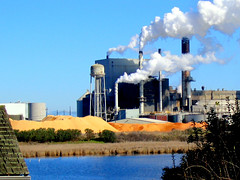
Photo Credit: by Jan Tik

OSHA Grain Facility Standard Not Working


If the OSHA grain facility standard is suppose to reduce the prevalence of combustible dust accidents in the grain industry here in the United States, then why has 10 grain facility explosions occurred over the past ten months? Since the tragic Imperial Sugar Refinery dust explosion, the Combustible Dust Policy Institute has recorded on the Google Grain Facility Incident Map through online news reports, 17 combustible dust fires and explosions at grain facilities with 35% of these events occurring as explosions.

In contrast, over the past six months with over 70 combustible dust explosions and fires in the manufacturing sector, 22 % have been explosions. Surprisingly, the number of injuries when comparing to combustible dust events between the two industry sectors are approximately the same.


Acceptable Explosions
Recent Senate testimony at a combustible dust hearing by governmental officials have stated that the number of grain facility combustible dust fires and explosions have been reduced since the OSHA Grain Facility Standard was introduced two decades ago. So what is an acceptable number of accidents if combustible grain dust explosions and fires are happening at the same pace as incidents in manufacturing plants?


The only difference between the two is the tragic event at Imperial Sugar, which gained the attention of congressional leaders to take preventative action. It's only a matter a time before the magnitude of the Georgia event catches up with the grain industry.

Take a fast rewind over 3o years ago, to 1977 when several grain silo facilities eerily exploded within days of each other creating a heavy death toll. It was these events that initiated legislation for the OSHA Grain Facility Standard. Earthquakes on the West Coast of high magnitude in metropolitan areas have the same effect. The events are spaced out many years apart but still result in high fatalities, injuries, and extreme economic damage.


Right Idea...Misguided Approach
It's commendable that legislators desire OSHA regulations with protective action to prevent further workplace injuries and fatalities. The problem is with the methodology in achieving this goal. For example, regarding the case with Imperial Sugar and the huge loss of life, concerned legislators were immediately outraged as was the public. Something had to get done and quickly to prevent additional occurrences of accidents of that magnitude. Quick it was, then ensuing congressional testimony began to turn into attacks on OSHA, the director of OSHA, and even the Secretary of Labor.


This is where the problem arose in drafting the Worker Protection Against Combustible Dust Explosion and Fires Act (H.R. 5522). Emotions entered into the picture instead of a reasoned approach which should of consulted all stakeholders concerning life safety, structural integrity, mission continuity, and mitigation of fire and explosions as outlined in the National Fire Protection Association (NFPA) standards.

Jurisdictional Collaboration
Congress needs to reevaluate the stark and unyielding provisions of the pending combustible dust bill, which has all the good intentions of accident prevention and worker safety. Instead the local jurisdictional aspect with collaborative partnerships must be aligned between federal, state, and local entities in the prevention and mitigation of future combustible dust incidents.

Already it is proven the federal provision in the OSHA Grain Facility Standard does not reduce the occurrences of combustible grain dust incidents. How can it? Doesn't take much higher math to figure there are not enough OSHA inspectors to inspect all the grain facilities on a regular basis. Besides it's not up to the federal government to ensure a facility will not go off like a Chinese bottle rocket to the moon at moments notice.

An excellent example of local jurisdictional cooperation with state, local, and federal alliances is Homeland Security. Billions of dollars have gone into that program and millions more too local and state jurisdictions. Is Homeland Security working? Maybe it's too early to tell. But the resources have been spent. Isn't our nations manufacturing sector just as vital or important?

Photo Credit: OSHA

Sunday, August 3, 2008

Ill Advised Combustible Dust Bill


The current combustible dust bill waiting for a vote in the Senate and passed earlier in the House is a faulty draft of proposed OSHA health and safety legislation. Posing as a quick fix with no bite, due to the lack of OSHA resources. Policy- makers failed to take in account the magnitude of the problem with the prevalence of combustible dust fires and explosions occurring across a wide swath of the manufacturing sector.


Furthermore, utilizing OSHA’s Combustible Dust National Emphasis Program (NEP), as recommended by the Chemical Safety Board does not fully address many manufacturing sectors that are experiencing combustible dust explosions and fires that were not included in the NEP.

North America Industrial Classification System (NAICS)
Of particular importance when assessing industries that have a frequent and/or high consequence of combustible dust explosions and fires is an understanding of the North America Industrial Classification System (NAICS), that OSHA utilizes in Appendix D-1 of the Combustible Dust NEP.

NAICS is a six digit hierarchical industry coding and classification system that the Bureau of Labor and the U.S Census Bureau also utilizes to measure economic activity in the United States. It enables policy-makers across a wide spectrum of government to understand the business cycle and how it relates to the flow of trade.

U.S. NAICS example

  • Sector 33 Manufacturing
    • Subsector 339 Miscellaneous Manufacturing
      • Industry Group 3399 Other Miscellaneous Manufacturing
        • Industry 33994 Office Supplies (except Paper) Manufacturing
          • U. S. Industry 339941 Pen and Mechanical Pencil Manufacturing
Older Standard Industrial Classification (SIC) system
NAICS groups are divided into 20 sectors, with five sectors goods-producing and fifteen services-producing sectors. The NAICS system replaced the older Standard Industrial Classification (SIC) system beginning in 1997. Additionally, there are 474 NAICS industries in the manufacturing sector from a total of 1,170 NAICS industries in contrast to the 1,004 found in the previous SIC.

A confusing aspect of the 2006 Chemical Safety Board, Combustible Dust Hazard Study is that the data spreadsheet referenced combustible dust incidents from 1980-2005 with the old SIC system. For the user of the data, it very difficult to ascertain the specific national industry that experienced combustible dust accidents. In contrast, OSHA began using the North American Industry Classification System (NAICS) for industry identification back in January 2003.

In addition to Appendix D-1, with the listing of 17 manufacturing NAICS in the OSHA NEP, there is Appendix D-2, listing another 50 manufacturing NAICS. OSHA believes these industries may have potential for combustible dust explosions/fires instead of a high frequency rate like in D-1.

Invisible Industries
This is where the problem arises, in solely relying on the OSHA Combustible Dust NEP as a yardstick for whether or not a manufacturing facility has a dust problem or not. The Combustible Dust Policy Institute has discovered through intensive research utilizing media reports and interviews over the past six months that 64% of the 70 combustible dust related explosions and fires since the Imperial Sugar Refinery explosion are not listed in Appendix D-1/D-2 NAICS list of the OSHA Combustible Dust National Emphasis Program (NEP).

Furthermore, of the 16 combustible dust explosions that have occurred, only 50% of the NAICS are listed in the NEP. How can a sound preventative safety policy be instituted if over 50% of the nation’s manufacturing sectors are ignored?

Photo Credit: by exfordy on Flickr "Creative Commons"

Sunday, June 22, 2008

Government Safety Data Underreported

Last week the House Committee on Education and Labor convened a hearing on OSHA's underreporting of on-the-job injuries and illnesses. This was old news concerning the underreporting by governmental agencies. Crucial data concerning workplace safety is vital in promulgating policy and regulations to protect the worker. OSHA should not be singled out in problems collecting data. The Chemical Safety Board, an independent governmental investigative agency is also underreporting and undercounting safety data in the 2006 release of the Combustible Dust Hazard Study.

Chemical Safety Board Underreporting

Specifically, the Chemical Safety Board provided to the public and OSHA accident data from 1980-2005, which included 281 combustible dust fires and explosions. The disclaimer in the report states : the combustible dust incidents included are likely only a small sampling, as no federal or state agency keeps specific statistics on combustible dust incidents, nor does any single data source provide a comprehensive collection of all these incidents, nor does any single data source provide a comprehensive collection of all these incidents

Furthermore, information about small combustible dust incidents and near-misses is also generally unavailable. For instance, because incidents that cause no fatalities, significant injuries, or major fires may not be recorded in the OSHA and fire incident databases, the true extent of the problem is likely understated. Due to these limitations, the CSB does not represent the incident data as complete or error-free, and other compilations of dust explosion data are available.

Fact or Fiction
So how can policy be developed concerning general combustible dust standards if policymakers and legislators have no idea of the extent of the problem? A small sampling is just that, a sample. The problem of only relying on a sampling has been exasperated in the last four months since the Imperial Sugar Refinery explosion, where Congress and the national media is utilizing the CSB incomplete data as fact.

Nowadays, since the conclusion of the 2006 CSB Dust Hazard Study, information concerning recent combustible dust incidents can easily be found with a Google search on the Internet, through numerous online news reports. Yet the CSB still persists in undercounting combustible dust incidents and releasing this information to Congress and the media.

For example, in recent incomplete data provided to Congress, the CSB has reported an additional 70 combustible dust explosions and fires since the 1980-2005 period, for a total of 350 combustible dust fires and explosions in the last 28 years. This equates to one incident a month which is disjointed and skewed from the actual extent of combustible dust incidents that are occurring. For example, in the last four months over 50 combustible dust fires and explosions have taken place in the manufacturing sector.

Conclusion

The Chemical Safety Board is a governmental accident investigative agency and not a research agency. Over the past decade CSB has performed a superb job with it's limited resources in finding the root cause of chemical plant accidents, fatalities, and injuries. At the completion of it's investigations CSB provides free educational videos on lessons learned and investigative reports in the prevention of future incidents.

Daily intensive research concerning where and when combustible dust incidents are occurring in the nation's manufacturing sector is not the job function of CSB. Instead of all the political posturing that is now occurring in Congress concerning the passage of a comprehensive general combustible dust bill, more attention needs to be directed in seeking accurate information concerning the entire scope of industry combustible dust incidents.

Friday, June 13, 2008

Taking Responsibility For Worker Safety

Just one man's opinion.
by Curtis Gray

Having spent a large part of my life as executive management in manufacturing companies, often directly responsible for implementing safety compliance systems, I have to speak up on the notion of OSHA regulation.

In my experience, OSHA is a joke agency. All their efforts are spent running around trying to impose fines on small companies for failing to comply with this or that accident reporting requirements and not on safety inspections or regulatory compliance. The bigger the company the less likely they will ever see an OSHA inspector. Even when complaints are lodged by workers, the investigation consists of asking the company management for its side of the story, and then promptly accepting whatever explanation for the infraction is given.

Disband OSHA
Like most government regulatory agencies, OSHA is just a dog and pony show to placate people's need for "someone to do something" about a problem. They talk and talk, and spend millions of our tax dollars on developing regulations and then never really do anything but pay lip service to enforcement. To make matters worse, that same agency prevents any private recovery by barring employees from suing company owners for their willful negligence in taking calculated monetary risks with worker health and safety.

This is the true reason the agency even exists. Like most governmental agencies, OSHA was not founded "by, of and for" the people for some altruistic motive. OSHA was founded through collaboration between business owners whose primary concern was to protect themselves from lawsuits and to make the cost of killing people predictable as part of their financial risk management strategies, lawyers and insurance companies who thrive on regulatory environments, and legislators who can point to their efforts in support of regulation to show how “hard” they work for their constituents, especially in an election year.

So, in my opinion, the entire country might be MORE safe if OSHA was disbanded and the private sector was allowed to enforce safety by suing companies completely out of business that fail to provide safe work environments.

DeBruce Grain Elevator Explosion
I was just down the road a couple of miles when the De Bruce grain elevator in Wichita, KS exploded in 1998, killing seven and injuring several others. The ground shook so hard we believed that McConnell Air Force Base was under missile attack. Windows were shattered for blocks in every direction. Flames shot hundreds of feet into the air and the smoke plume choked us all.

We watched in horror as helicopters attempted to lift survivors from the burning roof. It is hard to imagine how many tax and private dollars were spent in rescue and firefighting efforts, or how much was lost by disruption of the companies all around the area. Then millions more was spent on legal fees while a flurry of lawsuits were attempted.

To my knowledge, no suits succeeded, because of OSHA regulations blocking those worker's families from such action. Instead, they were all given the "standard" $200K (the value OSHA places on a life) and told "too bad", that’s the way OSHA works. A recent article in the Wichita paper remembering the anniversary of the event says the fines to De Bruce for their part in the incident amounted to about $650K, if I remember the figure correctly.

I suspect that did not even cover the legal costs OSHA itself incurred in conducting the investigation and imposing the fine. I'm equally sure it meant nothing to De Bruce -- probably less than a week's profit, and probably paid by their insurance company, anyway. This was not the first incident for De Bruce, and not the first violation at that particular elevator.

60 Minutes Story
I read with interest the story produced earlier this month by "60 Minutes", as well as the long list of comments made by readers concerning dust explosions. All one has to do to really understand a huge underlying problem is to look at those comments, along with information available on this web site. People in this country spend too much time trying to get someone else to do something about their problems instead of dealing with the issue directly themselves.

One person says it's OSHA's fault, Another says it's the company's fault. They blame the workers. Another says the insurance companies should fix the problem. Good grief. There is only one fix. Hello to the workers of America - REFUSE TO WORK IN THOSE CONDITIONS. GO ON STRIKE OR GET ANOTHER JOB.

More Lawyers and Legislators
The only sure way to stop companies from taking advantage of the savings associated with failure to provide a safe work environment is for them not to able to get anyone to work for them. It’s all about the money. That is the nature of capitalism. We had a saying I remember growing up, “money talks, sh__ walks.” More tax dollars spent on bigger government and more unenforceable regulations will never solve the problem. People will continue to die and be injured. The only thing that will change with new legislation is that more lawyers and legislators will make more money.

The only way any public company has ever been forced to change anything about its behavior is through clipping its revenue stream. Fines and such mean nothing. It does not come out of “their” pocket, it comes out of “ours”. When a company is fined or the insurance rates go up because a law suit is lost, that just becomes another cost of doing business.

Costs are just rolled into price. The stock holders and managers don’t dig into their pockets and pay the fine. The price of the product just goes up. So, ultimately, passing regulations that result in fines to businesses only serves as another taxing mechanism for the government. No one gets hurt but the consumer, and of course, the worker.

Accountability
True worker safety is about workers behaving in a safe manner, not about rules telling them they should. Don't we have enough history under our belts yet on this earth to recognize that people don't follow rules unless they want to? God himself, Creator of the universe, gave us rules to follow that have been violated since the dawn of time.

Why do we think rules made by OSHA will be any more respected? Even severe consequences, no matter by whom imposed, won't get it done. Again I site the consequences for failure to comply with God's rules. I don't think it can be much more severe than that. But we still don't follow the rules a great majority of the time because it is not convenient or expedient for us on an individual level.

My heart goes out to those who have been directly affected by every incident in the work place, dust explosion or otherwise. Thousands of workers are injured or killed at work every year. I have been injured on the job myself and spent years recovering to 90%, which is the best I will ever do. But it happened because I didn’t think about the unsafe manner in which I was behaving, not because I didn’t have Big Brother standing over my shoulder. I think most workplace injuries fall into that category. They are truly just legitimate accidents caused by the imperfect nature of the humans involved.

Conclusion
However, many ARE the direct result of known, unsafe working conditions for which regulations are already in place, like the De Bruce incident. The conditions are known both to the management AND the workers. And though I feel the corporations are complicate and liable, if you walk out in front of cars every day and eventually get hit by one, it's hard for me to place all the blame the driver or the manufacturer of the vehicle, even if they were speeding and talking on a cell phone, and even if the pedestrian had the legal “right of way”.

My dad only finished the 6th grade, but he was smart enough to teach me that rules don’t protect people – people have to protect themselves.

YOUR TURN: OSHA has lost its map

Wednesday, March 5, 2008

Pet Food Factory Combustible Dust Explosion

http://www.wqad.com/Global/story.asp?S=7966727

As the tally rises to thirteen combustible dust related fires and explosions since the Dixie Crystal sugar refinery explosion, legislators, labor leaders, and governmental officials are at odds with each other whether a comprehensive combustible dust standard is needed for general industry across a wide spectrum of business's that generate combustible dust hazards.

MONMOUTH -- Grain dust is the likely fuel of an explosion at a Monmouth pet-food factory Tuesday that injured one person. The explosion happened at 4:14 p.m. at a tower that Wells Pet Food Co. uses to store grain for its products, said Monmouth Assistant Fire Chief Patrick Spears.

Just as there are dozens of earthquakes around the world on a weekly basis, only a handful of tremors gain notice when they strike populated areas. Which can be compared to the numerous unnoticed combustible fires and explosions that have occurred in the United States since the highly publicized Dixie Crystal, Port Wentworth sugar refinery incident on the serene banks of the Savannah River.

At the moment, with a heavily touted electoral process thrusted upon the national stage, which includes issues of immigration, the war in Iraq, health care, education, taxes, and such. Consequently, the importance of a productive workplace which includes health and safety standards amongst the nation's work force and electorate ranks way far below same-sex marriage.

The OSHA Act, which became law in 1970 has reduced work place fatalities and injuries tremendously but has a way to go before it's austere goals are obtained. Especially when at the end of the workday tomorrow, on an average, fifteen of your loved ones will not return home from at the end of the day.

Either a messy confrontation will ensue when legislators are polarized across party lines in debating whether a comprehensive combustible dust standard is needed. Or in contrast, the electorate can personally get involved, making phone calls , sending emails, and organizing at the grassroots level with the goal in mind that combustible dust explosions and fires in the nations workplace are no longer acceptable.


Saturday, March 1, 2008

Combustible Dust Hazards: Alarming Trend

http://www.bismarcktribune.com/articles/2008/03/01/news/state/150068.txt

An alarming trend is occurring across the nation at processing facilities in general industry where fires and explosions are occurring repeatedly, especially where combustible dusts are generated. In many instances no injuries or fatalities occur; only damage to the facility and a negative economic impact to the community.

In less fortunate instances, such as the preventable recent tragic Dixie Crystal sugar refinery explosion located in the heart of Dixie, lives are senselessly lost in conjunction with insurmountable physical pain and suffering to workers and their loved ones.

It was only two years ago that the Chemical Safety Board submitted, at the completion of a Combustible Dust Study, a report to the Department of Labor recommending the implementation of an OSHA comprehensive dust standard to protect the health and safety of workers from the hazards of combustible dust explosions and fires. So far the OSHA has failed to act. In the meantime combustible dust explosions and fires continue across a wide spectrum of industries across the nation's heartland.

GRAND FORKS (AP)..."The fire early Thursday morning was contained in the dust collection system at the North American Foods plant..."

In the CSB study for the period of 1980-2005, investigators discovered that over 40 percent of combustible dust fires and explosions occurred in the dust collection systems and 24 percent of these incidents were sparked in food processing facilities such as the one at North American Foods in Grand Forks, North Dakota.

The CSB found that in all industries, dust collectors are the equipment most often involved in incidents;similarly, Zalosh et al. (2005) report that dust collectors account for more than 40 percent of all dust explosions.

Findings of the actual ignition source of the Grand Forks dehydrated potato plant has yet to be determined. In retrospect, all plant managers
throughout the nation , through close scrutiny of their Material Safety Data Sheets (MSDS) will have to reassess their current operating procedures to insure minimum explosive concentrations (MEC) and minimum ignition temperatures (MIT) are not breached in the vicinity of potential ignition sources such as non-compliant electrical fixtures.

Biggest challenge is...most MSDS, fail to list these important physical properties in contrast and analogous to flammable liquid flash points listed for petroleum product. Incidents of combustible fires and explosions will continue while the workforce is in the dark in regards to the combustible dusts hazards they are daily working with across the nation.

Welcome Post

Welcome to the debut of the Combustible Dust Explosion/Fire Blog. I'll keep you updated on news events concerning combustible dust related explosions and fires that occur in the workplace at facilities throughout the United States. Hopefully in the future an OSHA general industry comprehensive dust standard will be implemented, which will prevent additional preventable incidents from occurring.


View Larger Map


Questions, Problems, Feedback? Please send email by clicking this link...Thanks

©Copyright 2008-2012. Combustible Dust Policy Institute
The information in http://dustexplosions.blogspot.com/ is not meant to be a substitute for the Code of Federal Regulations (CFR), Federal Register, and other OSHA documents, which should serve as the primary source of regulatory guidance. The information on this site should not be used in place of appropriate technical or legal advice related to your company's specific circumstances. Combustible Dust Policy Institute tries to provide quality information, but we make no claims, promises or guarantees about the accuracy, completeness, or adequacy of the information contained in or linked to this web site and its associated sites. Combustible Dust Policy Institute has no liability arising from or relating to the use, interpretation, or application of the information or its accuracy or inaccuracy. Copyright notice: All materials in this site are copyrighted by the Combustible Dust Policy Institute. No materials may be directly or indirectly published, posted to Internet and intranet distribution channels, broadcast, rewritten for broadcast or publication or redistributed in any medium without permission.