Pages

Showing posts with label Combustible Dust National Emphasis Program. Show all posts

Saturday, January 28, 2012

OSHA Combustible Dust National Emphasis Program (NEP) a Dismal Failure

"Assistant Labor Secretary Jordan Barab says he believes it's too early to assess the effectiveness of the program." Too early to assess? So how many more catastrophes like Hoeganaes must occur before we figure out the Combustible Dust National Emphasis Program (NEP) is a dismal failure?

Since 2008, through researching media accounts of combustible dust related fires and explosions the Combustible Dust Policy Institute has determined that over 50% of incidents are occurring in specific industries (NAICS) not recognized in the OSHA ComDust NEP.

Subsequently, the CSB Hoeganaes Case Study recommendation "Revise the Combustible Dust National Emphasis Program (NEP) to add industry codes for facilities that generate metal dusts(e.g., North American Industrial Classification System, NAICS, code 331111 Iron and Steel Mills, and other applicable codes not currently listed)," is only the tip of the iceberg.

What about the dozens of other industries throughout the entire manufacturing and non-manufacturing sectors not recognized in the NEP having a history of combustible dust incidents? Let’s stop fooling around and attempting to segment specific industries while Rome is burning. If you have combustible dust at your facility then it does not matter what you’re NAICS specific industry classification is.

As retired University of Michigan Professor of Aeronautical Engineering Bill Kauffman stated in the article, "It's not rocket science," If you don't believe it then check for yourself in the next news account of a combustible dust related incident where the specific industry (NAICS) is not recognized in the ComDust NEP. If this isn't a failure then I don't know what is.

Thursday, January 13, 2011

Process Upset Causes Combustible Dust Related Fire

Another minor combustible dust fire in the news with no injuries or fatalities. That is the good news..Yet stakeholders need to be aware that besides hot surfaces, arcs, sparks, static electricity, etc (process situations) that can ignite combustible dust, so can process upsets such as the case in this incident.

"combination of water and molten steel can cause a flash-up. That flash of fire likely set dust on fire, which then spread to a nearby storage room." (Watch the video)

WTOL-news article

OSHA is in the rulemaking process for a combustible dust regulation that is a continuum of the OSHA Combustible Dust National Emphasis Program (NEP). The primary problem with this approach, is that it solely notes specific national industries (NAICS)  that supposedly have a high probability or high consequence or potential for combustible dust incidents and ignoring others with potential fire/explosion hazards. Now for the bad news.. According to media account, over 50% of combustible dust related fires and explosions occur in national industries (NAICS) not listed in the the OSHA ComDust NEP, such as the case with this incident

For example, the real eye opener concerning this minor incident, is that this facility is an iron and steel mill national industry (NAICS 331111), which is not acknowledged in the OSHA Dust NEP as having high probability/consequence or potential for combustible dust incidents. So if the tree fell in the forest and no one heard it, did it fall?

There are dozens of other national industries composed of thousands of facilities in the wood, paper, plastic, metal, chemical, and food manufacturing sectors not listed in the OSHA ComDust NEP that have regular occurring minor combustible related dust fires which don't get notice from many other stakeholders either. This attitude is attributed to normalization of deviation as what occurred in the events leading up to the 1986 Space Shuttle Challenger disaster. Same thing with a catastrophic dust explosion as it is a rare event also.

It is time to face reality and get with the program, understanding the ComDust fire/explosion problem is a process condition (equipment) issue and not solely a national industry (NAICS) subject. Whether an industry is listed in the OSHA ComDust NEP or not as a non-NEP NAICS, they all have similar process materials (combustible dust) and process situations (ignition sources). So how can we say that one national industry has high probability/consequence or potential for a combustible dust incident because it is listed yet another one doesn't because it is not listed in the NEP? Yet both industries generate combustible dust during the manufacturing process. This train of thought does not hold water as America is burning. Just remember that any minor combustible dust related fire is a failed catastrophic combustible dust explosion.


Posted via email from ComDust

Tuesday, March 3, 2009

2008 Dust Explosions and Fires Overview


The Combustible Dust Policy Institute found through researching media accounts in 2008 that over 150+ combustible dust related fires and explosions occurred in the manufacturing, non-manufacturing and utility sectors in the United States. Over 30% of these incidents are repeats of prior fires and explosions that fire departments are responding to. Subsequently, these reoccurring incidents mostly go unnoticed by OSHA, unless there are at least three injuries or one fatality.


The current OSHA Combustible Dust National Emphasis Program (NEP) directive does not address the majority of national industries (NAICS) where incidents are frequently occurring. For example, over 60% of incidents in 2008 occurred in national industries not listed in Appendix D-1 and D-2 of the NEP. Too much emphasis and resources is being directed toward the OSHA Dust NEP, when the majority of incidents are occurring in national industries not referenced in the NEP.


To further complicate the situation, the Chemical Safety Board Combustible Dust Hazard Study did not include in the profile of affected industries, the Paper, Textile, and Non-Manufacturing subsectors as industries where a combustible dust hazard exists. For example, in 2008, over 22% of incidents occurred in these subsectors. Without this important information, OSHA did not include paper national industries in the NEP. Over 10% of combustible dust related incidents in 2008 occurred in paper national industries.


In contrast, over 7% of incidents in 2008 occurred in the rubber/plastics subsector, where these national industries were referenced 90% of the time in the OSHA Dust NEP. A NAICS listing in the NEP does not guarantee the probability of occurrence will be lessened. For instance, the national industry NAICS: 326150/Urethane and Other Foam Product Manufacturing, the U.S Census Bureau lists over 433 firms in the USA. In 2008, OSHA inspected 9% (37) of these facilities with only three inspected for an emphasis on combustible dust.


For 2008, media accounts of combustible dust related fires and explosions occurred in thirty-six states. The states with 10 more or more incidents included Ohio (12), Illinois (10), Maine (10), Pennsylvania (10), and Iowa (10). Injuries occurred in 12% of the incidents. Of the total incidents reported by the media in 2008, 20% were combustible dust explosions.


Reviewing the the grain sector, through media accounts, over 50 combustible dust related fires and explosions occurred in 2008 with over 30% (15) were dust explosions. The adverse economic impact from dust explosions in this sector was much greater than the economic impact from explosions in the manufacturing sector. A question does arise if it makes good sense to model the current pending combustible dust legislation after the OSHA Grain Facility Standard, when so many injuries and economic damage is occurring from dust explosions similar to what’s happening in the manufacturing sector?


This brief overview of combustible dust related incidents in 2008 will hopefully provide all stakeholders additional insight into the complexity of combustible dust hazards in the workplace. The current occupational health and safety regulatory framework does not currently address the magnitude of the problem that encompasses all the national industries where incidents are repeatedly occurring throughout the manufacturing and non-manufacturing sector.

Friday, August 8, 2008

Paper Mills Exempt From ComDust NEP


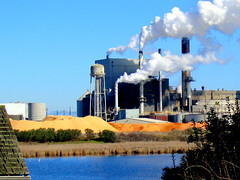
The recent box manufacturing plant fire Thursday evening at Longview Fibre in Yakima, Washington brings to mind a combustible dust related fire three months earlier at Lincoln Paper & Tissue in Lincoln, Maine. In the Washington incident, the facility fire sprinkler system in conjunction with a team effort from the the industrial fire brigade prevented the fire from destroying the facility.

In contrast, with the assistance from local mutual aid, Lincoln Fire Department Fire-fighters subdued the New England blaze after a three hour battle. Luckily no one was injured in both instances, only damaged egos of plant managers and owners. The Longview facility in the Pacific Northwest, sustained an estimated $100,000 in damages according to news reports from the Yakima Herald-Republic.

Inspectors Find No Dust
Less than three weeks prior to the New England paper mill fire, the Federal OSHA Augusta, Maine office cited the facility for electrical, hazardous materials, and exit route hazards. According to news reports from WABI TV, the facility experienced a similar fire months earlier in January 2008. No mention of dust hazards are noted in the online OSHA accident and citation report.

Reviewing OSHA inspection reports for the Longview Fibre paints a revealing picture. Over the past decade Washington OSHA inspectors visited Longview Fibre Washington plants over two dozen times for complaints, referrals, follow-ups, and planned visits. The last citation "serious" was in 11/02/05, for an Ammonia (NH3) infraction. No issues concerning a combustible dust hazard were noted at this facility either.

NAICS Emphasis
The current OSHA
Combustible Dust National Emphasis Program (NEP) initially became effective on October 18, 2007 and was reissued March 12, 2008, over a month after the Imperial Sugar Refinery sugar dust explosion. The only difference between the two NEPS, besides the change of the date at the top right hand corner, is that the newer directive divides the NAICS into Appendix D-1 and D-2 with two diverse classifications:


  • Industries with More Frequent and/or High Consequence Combustible Dust Explosions/Fires D-1

  • Industries that may have Potential for Combustible Dust Explosions/Fires D-2
In either case, the Paper Manufacturing subsector, with Industry Groups of Pulp, Paper, and Paperboard Mills and Converted Paper Product Manufacturing are not covered in the revised OSHA Combustible Dust (NEP).

Amazingly, NAICS 322211/corrugated and solid fiber box manufacturing at Longview Fibre and NAICS: 322121/paper mills at Lincoln Paper & Tissue are not under the OSHA radar as having a combustible dust hazard present at their facilities. Yet combustible dust related incidents can still occur at hundreds of other facilities in the Paper Manufacturing sector without proactive preventative and mitigative measures being addressed in addition to not being listed in the OSHA Combustible Dust NEP.

State Dust NEP Voluntary
The most stunning aspect concerning the OSHA Combustible Dust NEP, is that for states like Washington that have there own OSHA program similar to Cal-OSHA, is that State plan participation in this national emphasis program is strongly encouraged but is not required.

Thats correct, participation is voluntary. The Combustible Dust Policy Institute recently talked with an official from Washington OSHA and it was reaffirmed that the state does not have an emphasis program for combustible dust due to financial resource considerations.

Not If, But When
Combustible dust related fires and explosions will continue throughout the year in the manufacturing sector. At the present rate, the Combustible Dust Policy Institute has projected with approximately 12 incidents/monthly, an additional 50 combustible dust related fires and explosions will occur before years end.

Don't gamble with borrowed time, even if your facility is not a listed NAICS in the OSHA Combustible Dust NEP and generates combustible dust from combustible particulate solids. Perform a process hazard analysis now and have your dust tested for ignition sensitivity and explosion severity immediately as time permits while the sands in the hour glass are dwindling.

Photo Credit: by Jan Tik

Sunday, August 3, 2008

Ill Advised Combustible Dust Bill


The current combustible dust bill waiting for a vote in the Senate and passed earlier in the House is a faulty draft of proposed OSHA health and safety legislation. Posing as a quick fix with no bite, due to the lack of OSHA resources. Policy- makers failed to take in account the magnitude of the problem with the prevalence of combustible dust fires and explosions occurring across a wide swath of the manufacturing sector.


Furthermore, utilizing OSHA’s Combustible Dust National Emphasis Program (NEP), as recommended by the Chemical Safety Board does not fully address many manufacturing sectors that are experiencing combustible dust explosions and fires that were not included in the NEP.

North America Industrial Classification System (NAICS)
Of particular importance when assessing industries that have a frequent and/or high consequence of combustible dust explosions and fires is an understanding of the North America Industrial Classification System (NAICS), that OSHA utilizes in Appendix D-1 of the Combustible Dust NEP.

NAICS is a six digit hierarchical industry coding and classification system that the Bureau of Labor and the U.S Census Bureau also utilizes to measure economic activity in the United States. It enables policy-makers across a wide spectrum of government to understand the business cycle and how it relates to the flow of trade.

U.S. NAICS example

  • Sector 33 Manufacturing
    • Subsector 339 Miscellaneous Manufacturing
      • Industry Group 3399 Other Miscellaneous Manufacturing
        • Industry 33994 Office Supplies (except Paper) Manufacturing
          • U. S. Industry 339941 Pen and Mechanical Pencil Manufacturing
Older Standard Industrial Classification (SIC) system
NAICS groups are divided into 20 sectors, with five sectors goods-producing and fifteen services-producing sectors. The NAICS system replaced the older Standard Industrial Classification (SIC) system beginning in 1997. Additionally, there are 474 NAICS industries in the manufacturing sector from a total of 1,170 NAICS industries in contrast to the 1,004 found in the previous SIC.

A confusing aspect of the 2006 Chemical Safety Board, Combustible Dust Hazard Study is that the data spreadsheet referenced combustible dust incidents from 1980-2005 with the old SIC system. For the user of the data, it very difficult to ascertain the specific national industry that experienced combustible dust accidents. In contrast, OSHA began using the North American Industry Classification System (NAICS) for industry identification back in January 2003.

In addition to Appendix D-1, with the listing of 17 manufacturing NAICS in the OSHA NEP, there is Appendix D-2, listing another 50 manufacturing NAICS. OSHA believes these industries may have potential for combustible dust explosions/fires instead of a high frequency rate like in D-1.

Invisible Industries
This is where the problem arises, in solely relying on the OSHA Combustible Dust NEP as a yardstick for whether or not a manufacturing facility has a dust problem or not. The Combustible Dust Policy Institute has discovered through intensive research utilizing media reports and interviews over the past six months that 64% of the 70 combustible dust related explosions and fires since the Imperial Sugar Refinery explosion are not listed in Appendix D-1/D-2 NAICS list of the OSHA Combustible Dust National Emphasis Program (NEP).

Furthermore, of the 16 combustible dust explosions that have occurred, only 50% of the NAICS are listed in the NEP. How can a sound preventative safety policy be instituted if over 50% of the nation’s manufacturing sectors are ignored?

Photo Credit: by exfordy on Flickr "Creative Commons"

Friday, April 18, 2008

63,000 Firms Under OSHA ComDust Program

OSHA's Combustible Dust National Emphasis Program includes over 63,000 firms across a wide spectrum of industries. If all the firms were to be inspected in a one year period then that would equate to 200 inspections daily in determining if a combustible dust hazard exists. This would be impossible with OSHA's limited resources . Additionally, the magnitude of the problem increases with the number of establishments the individual firm has. So one must take into account the number of facilities to increase by 20-30 % from the amount of establishments a firm has.

The Combustible Dust Policy Institute recently completed a study, using the data from the 300 incidents compiled from the Chemical Safety Board combustible dust study. The findings were revealing utilizing U.S. Census Bureau data that was obtained from North American Industrial Classification System records. For instance, an additional 66 manufacturing industries that have a history of combustible dust explosions and fires that OSHA has ignored and is not listed in the Combustible Dust National Emphasis Program. This would conservatively add another 50,000 firms that are exposed to potentially hazardous combustible dust.

With over 113,000 firms in process manufacturing that potentially generate combustible dust explosive atmospheres it is quite clear that voluntary compliance and waiting on the arrival of an OSHA inspector is out of the question. Since the Imperial Sugar refinery explosion in February there has been over 30 combustible dust related fires and explosions.

Either the planets, moon ,and sun had to be in perfect alignment for such a high number of incidents or all of a sudden combustible dust explosions occurred due to pure coincidence. Either way, the 281 combustible dust incidents that the Chemical Safety Board compiled is only a small sample from the period 1980-2005.

A more reasonable number of combustible dusts incidents extrapolating the current 30 incidents would be over 3,000 combustible incidents over the past three decades. During the course of future pending legislation concerning the Combustible Dust Explosion and Fire Act, the Combustible Dust Policy Institute will be completing additional studies in determining the breadth of this complex issue.


Questions, Problems, Feedback? Please send email by clicking this link...Thanks

©Copyright 2008-2012. Combustible Dust Policy Institute
The information in http://dustexplosions.blogspot.com/ is not meant to be a substitute for the Code of Federal Regulations (CFR), Federal Register, and other OSHA documents, which should serve as the primary source of regulatory guidance. The information on this site should not be used in place of appropriate technical or legal advice related to your company's specific circumstances. Combustible Dust Policy Institute tries to provide quality information, but we make no claims, promises or guarantees about the accuracy, completeness, or adequacy of the information contained in or linked to this web site and its associated sites. Combustible Dust Policy Institute has no liability arising from or relating to the use, interpretation, or application of the information or its accuracy or inaccuracy. Copyright notice: All materials in this site are copyrighted by the Combustible Dust Policy Institute. No materials may be directly or indirectly published, posted to Internet and intranet distribution channels, broadcast, rewritten for broadcast or publication or redistributed in any medium without permission.