http://www.herald-mail.com/?cmd=displaystory&story_id=201753&format=html
Within six weeks another combustible dust explosion occurred at AJ Stove and Pellets in Marion, PA., which is a wood pellet manufacturing facility. Since there were no fatalities or injuries in the prior hopper explosion on July 15, an OSHA inspection did not ensue.
This is not a question of OSHA inspections after manufacturing facility combustible dust explosions or fires but whether local fire inspectors working closely with the responding fire departments have means to communicate issues of fire safety after a combustible dust related fire or explosion.
It's much easier to draft a combustible dust bill instead of the time consuming effort that is needed to address the root of the problem. Which is local fire inspections utilizing a building permit system to assist in funding fire inspectors for proactive inspections of manufacturing facilities.
OSHA resources are already strained and less than 10% of the nations manufacturing plants are inspected with the unique NAICS in the wood pellet industry. Would local fire marshal inspections lessen the number of incidents while at the same time reduce the severity of combustible dust related fires and explosions? A community in New Zealand offers an excellent alternative to fire safety concerning commercial buildings, utilizing fire inspectors.
In the past six months, over 50% of combustible dust explosions occurring in the manufacturing sector are repeats of prior combustible dust fires and explosions. A majority of these had no record of OSHA inspections prior to or after the event. The prevalence of incidents will continue to reoccur until the root of the problem is addressed and that is cooperation between fire departments and fire inspectors after the initial incident.
Three days prior to the AJ Stove & Pellet explosion, Industrial Roller Company in Smithton, Illinois had a rubber dust explosion in the dust hopper and the fireball exiting the hopper severely burned a worker. From a news report in the Belleville New Democrat, Mike Schutzenhofer, assistant chief of the Smithton Fire Department, stated, “In the last four years or so, we’ve been called there for about six fires involving their dust collection system,” Schutzenhofer said. “This is the first one where there’s been an injury.”
Waiting for an injury is to late for taking action. In a proactive manner, all combustible dust related fires need to be investigated to ensure general consensus industry standards of care located in the NFPA combustible dust standards are adhered too. For example, a fire inspector or fire chief, knowledgeable about NFPA combustible dust standards might of realized earlier at the Industrial Roller location that the dust hopper was in too close proximity to the driveway, street, and rear garage door of the plant.
Instead relocating the process unit in a restricted area, safely away from pedestrian traffic would be the course of action in lessening the severity (mitigating) the explosion, according to the NFPA combustible dust standards. Monday morning armchair quarterbacking after the worker was severely burned is too late now. Hopefully in the future, the root of the combustible dust issue will be addressed with local jurisdictional interaction between all stakeholders. An OSHA comprehensive combustible dust regulation will not provide the workplace protection that is direly needed with the current lack of OSHA resources.
Friday, August 22, 2008
Wood Pellet Plant Dust Explosion Again

Thursday, August 21, 2008
Combustible Dust Materials Causing Incidents

According to media accounts over the last six months since the Imperial Sugar Refinery sugar dust explosion over 80 combustible dust related fires and explosions have occurred in the United States in the nations' manufacturing sector. Many incidents are not reported to the media, so the fires and explosions that are reported are only a small sampling of events in the manufacturing sector.
The Combustible Dust Policy Institute at the research facility in Santa Fe, Texas has discovered that over 30% of the incidents are repeats of combustible dust fires and explosions. Incidents reoccur because the initial fire or explosion is not reported to enforcement and regulatory agencies unless fatalities or numerous injuries result from the incident. As a result, proactive preventive and mitigative measures, which minimize the occurrence and reduce the severity of future incidents are not implemented.
Since February 7, 2008, wood dust is the leading material involved in combustible dust incidents, followed by metal (17%), food (14%), and paper (12%). The Chemical Safety Board Dust Hazard study did not take into account combustible dust fires and explosions caused by paper or textile dust. Additionally, the OSHA Combustible Dust National Emphasis Program (NEP) does not recognize paper as a material involved in industries that may have potential for combustible dust explosions/fires or have more frequent and/or high consequence combustible dust explosions/fires. The current incident rate over the last six months paints a different story, with paper combustible dust the fourth leading material causing fires or explosions.
Utilizing the 2006 CSB Dust Hazard study as the sole indicator of materials that are the cause of incidents can be misleading. For example the CSB listed only 281 incidents for the 1980-2005 period, when the correct amount should be over 3,500 incidents. Since the incidents in the Dust Hazard Study were less than a 10% sampling, all the other metrics such as specific industries and materials involved in incidents are severly skewed and distorted representing a false picture. This could present a problem for stakeholders conducting a process hazard analysis of their facilities, believing that incidents don't occur in their specific industry group when they really do.
On the other side of the coin, since the CSB data is incorrect, industries were reported with a high incident rates when they are not. For example, over the last six months materials involving food products account for 14% of incidents. In contrast, the CSB report states that materials involving food are the leading cause of combustible dust fire and explosions at over 23%. Currently wood (33%) and metal (17%) materials are the leading cause of combustible dust incidents.
The CSB Dust Hazard Study is an excellent resource in understanding how combustible dust fires and explosions occur. Additionally the report highlights key areas that should be addressed in preventing future incidents. Hopefully in the future, a reporting system will develop utilizing Internet technology so all stakeholders can grasp the extent of the problem and take appropiate measures in the prevention and mitigation of future incidents
Wednesday, August 20, 2008
Hardboard Plant Dust Fire
A Tuesday evening (8/19/08) combustible dust related fire at a Georgia Pacific hardboard plant in
The manufacturing of hardboard follows under NAICS 321219 (Reconstituted Wood Product Manufacturing), which are manufacturing plants that produce hardboard, particleboard, insulation board, medium-density fiberboard (MDF), waferboard, oriented strand board (OSB), and other panelized products produced from wood chips and particles (combustible particulate solids) CPS.
Since the first of the year, the OSHA IMIS database indicates that 17 inspections have taken place at NAICS 321219 facilities throughout the
Two months ago at a reconstituted wood product facility in Oconomowoc, WI, a combustible dust General Duty Clause citation was issued, which stated :
"where the employer did not furnish a place of employment which were free from recognized hazards that were causing or likely to cause death or serious physical harm, including severe burns, to employees in that workers were exposed to dust explosion, deflagration, or other fire hazards from dust collectors being located inside a building."
Of these recent incidents, injuries have occurred at six percent of the facilities. On a side note, the Chemical Safety Board Dust Hazard Study, revealed that from 1980-2005 in the 281 combustible dust incidents that were found, over 70 percent of the incidents incurred fatalities and injuries. Many who read or hear this data in news reports and congressional testimony are falsely mislead to believe that all combustible dust fires and explosions will result in a 70% fatality and injury rate. This is a far stretch from reality and only deviates from an informative approach in achieving a combustible dust solution to the benefit of the worker and workplace.
Just recently, five days ago a combustible dust related fire flared up at a wood pellet facility in
Monday, August 18, 2008
Multiple Repeat Wood Pellet Plant Fires
http://bangornews.com/news/t/news.aspx?articleid=168495&zoneid=164
After a three month respite from a previous combustible dust related fire, Corinth Wood Pellets experiences another fire. The last fire caused thousands of dollars worth of damage. Currently there is no OSHA record in the IMIS database that the facility had been inspected previously since the last incident. With only 12 highly dedicated and professional OSHA safety inspectors alloted for the entire state of Maine, it should not be expected that OSHA can inspect over 1,8oo manufacturing facilities on a regular reoccurring basis.
The Pellet Fuels Institute lists 24 wood pellet manufacturing facilities amongst it's membership on the east coast. Since May 2008, over 10% of east coast membership facilities have experienced fires. Additionally, last month AJ Stoves & Pellets, located in Marion, PA, not a member of PFI, experienced a dust explosion in their hopper. With these plants operating at 100% capacity, future combustible dust related fires and explosions are occurring at a rapidly alarming rate.
OSHA resources are already strained and less than 10% of the nations manufacturing plants are inspected with the unique NAICS in the wood pellet industry. Would local fire marshal inspections lessen the number of incidents while at the same time reduce the severity of combustible dust related fires and explosions? A community in New Zealand offers an excellent alternative to fire safety concerning commercial buildings, utilizing fire inspectors. Can we do the same in the United States instead of tasking OSHA to enforce building fire safety?
Recent Explosions and Fires
8/22/08-AJ Stoves & Pellets- dust explosion/hopper
8/15/08 Corinth Wood Pellets- fire/sawdust dryer
8/10/08 New England Wood Pellets- fire/pellet mill
7/15/08-AJ Stoves & Pellets- dust explosion/hopper
5/20/08 Corinth Wood Pellets- fire/exterior burner
Friday, August 15, 2008
Michigan Composites Fire and Explosions
Yesterday morning 8/14/08, a devastating fire at Michigan Composites, a marine urethane core component facility on the south side of Nile, Michigan resulted in nearly a dozen fire departments responding with over 70 firefighters from two states. Residents in over 40 homes were evacuated and a three mile radius safety perimeter was implemented by fire protection officials.
News accounts have reported that workers heard numerous explosions following a machine that caught fire. Additionally, the owner stated the fire started in the dust collection system in a piece of sanding equipment. Hopefully the fire investigation results of the cause of the tragic fire will be forthcoming soon. In the meantime, workers at the plant no longer have a place of employment in the already economically depressed state of Michigan.
Urethane core components in the manufacturing subsector 326 Plastics and Rubber Products Manufacturing follow under NAICS 326150 Urethane and Other Foam Product (except Polystyrene) Manufacturing. Reviewing the OSHA Combustible Dust NEP, it's noted that this niche industry has a Potential for Combustible Dust Explosions/Fires in Appendix D-2.
The U.S Census Bureau historical statistics for NAICS 326150, highlights 623 establishments in the United States that utilize urethane in the manufacturing process. Since the beginning of the year, OSHA has inspected 19 of these establishments, or three percent, in the entire nation according to the Integrated Management Information System (IMIS) database.
California (74), North Carolina (60), Texas (47), and Michigan (44) are the leading states in this NAICS. So far none of Michigan 's NAICS 326150, that are similar to Michigan Composites have been inspected this year. Would an OSHA prior inspection prevented or reduced the severity of yesterdays devastating fire that wracked havoc on the Niles, Michigan community?
Composites is an interesting subject. In the maritime construction of yachts it is an excellent substitute for wood. When utilizing this building material, either low density polyisocyanurate foams or high density polyurethane foams are used . Manufacturers can combine the two to achieve even more diverse results. In the manufacturing process when utilizing polyisocyanates, additional provisions must be incorporated in the collection of dust due to its nature in shedding dust very easily.
A questions arises by the casual observer whether the above foams provided the dust in the dust collection system that contributed to the explosions and fire that was mentioned by the plant owner and workers in earlier news reports. Only time well tell the final results of the fire investigation. In the meantime, the other 622 establishments spread across the nation, with NAICS 326150 (Urethane and Other Foam Product (except Polystyrene) Manufacturing) can reassess their preventative and mitigative measures in reducing potential fire and explosion hazards from combustible particulate solids.
Recent Urethane/Plastic Combustible Dust Related Fires and Explosions
- 7/1/08 Cope Plastics -explosion/fire dust collector
- 5/6/08 Apex Millworks-fire in urethane dust bin/ sanding
- 3/30/08 Quality Cushion & Pad- polyurethane foam-fire/grinding
According to Niles Township Fire Chief Gary Brovold, the fire started when sparks coming from a sanding unit spread to what sales manager Brian Carpenter called "polyurethane saw dust."
Monday, August 11, 2008
Combustible Dust Parallax Solution
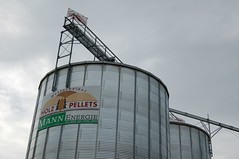
Not much news in the national media when OSHA proposed $135,200 in fines directed toward New England Wood Pellet, LLC in comparison to nearly $9 million imposed on the Imperial Sugar Corporation three days earlier. Since the sugar dust explosion in Port Wentworth, Georgia over six months ago there hasn’t been any other sugar refinery combustible dust fires or explosions in the United States. In contrast, over 70 combustible dust related fires and explosions have occurred in other areas of the manufacturing sector.
An interesting aspect of the New England Wood Pellet OSHA citations is that the facility was cited for combustible dust hazards. Recent congressional testimony has implied that OSHA is not doing enough to prevent future combustible dust accidents from occurring. If this is correct reasoning that OSHA is not doing its job, then why was the Jaffrey, New Hampshire wood pellet manufacturer cited by OSHA for combustible dust violations?
Recent Incidents
Over the past three months there’s been two combustible dust related explosions and fires at wood pellet manufacturing facilities in Corinth, ME and Marion, PA. Luckily in both instances there were no injuries, only tens of thousands of dollars in property damage. Reviewing the OSHA Integrated Management Information System (IMIS) incident database revealed no prior OSHA inspections of theses facilities.
Would a prior visit by an OSHA inspector prevented these accidents? Proponents of the Combustible Dust bill state that the Imperial Sugar explosion could have been prevented if an OSHA comprehensive combustible dust bill was implemented as recommended by the Chemical Safety Board (CSB), two years earlier. Armchair quarterbacking, the following day after the game has similar connotations placing blame on the team and coach because certain plays "would have or could have” been made to achieve a win.
OSHA has been in the combustible dust game years before the 2006 Combustible Dust Hazard Study was submitted by the CSB. The only problem in this day after the game is that OSHA has no fans watching. Instead emotional knee jerk reactions to seismic proportional events have detracted from sensible solutions to the complex combustible dust issue.
Knack for the NAICS
At the research facility in Santa Fe, Texas, the Combustible Dust Policy Institute recently discovered a unique niche manufacturing industry that provides an educational and informational thumbnail view of combustible dust generated from combustible particulate solids in the wood pellet manufacturing industry.
This is an ideal industry to review since it’s small in comparison to the hundreds of other establishments in NAICS 321999 (All Other Miscellaneous Wood Product Manufacturing) For reference, the OSHA Combustible Dust NEP, lists this NAICS in Appendix D-2 as Industries that may have Potential for Combustible Dust Explosions/Fires.
A quick search online in Wikipedia resulted in an excellent article on wood pellets and a helpful external link to the Pellet Fuel Institute. The PFI website mentions over 80 wood pellet manufacturers in North America producing over one million tons of pellets annually. That’s quite a bit of dust. So while methodically comparing all the wood pellet manufacturers on the PFI website with the OSHA (IMIS) incident database its possible to ascertain whether a facility has had prior OSHA inspections and if so any citations.
Looking for the Dust
Results of the research are quite revealing and unfold the facts concerning OSHA’s duties in protecting the worker and workplace from harm against combustible dust related fires and explosions. For instance, after an April 2003 inspection at an Allegheny Pellet Corporation wood pellet manufacturing plant in Youngsville, PA, the professional OSHA inspector cited the facility for combustible dust hazards using the General Duty Clause, Section 5(a)(1) of the Occupational Safety and Health Act of 1970:
“likely to cause death or serious physical harm to employees in that employees were exposed to burn injuries and dust explosions because material conveying equipment was not equipped with approved devices to prevent, mitigate, and/or control the hazards associated with fires and dust explosions.”
Specifically, the OSHA utilized national recognized standards of care in NFPA 664 Standard for the Prevention of Fires and Explosions in Wood Processing and Woodworking Facilities.
How much more comprehensive does an OSHA citation need to be? Especially if wood manufacturing facilities already have a history of violations for combustible dust infractions many years prior to the 2006 Chemical Safety Board comprehensive combustible dust regulation recommendations.
Nearly forty percent of the 70 wood pellet manufacturing facilities listed on the Pellet Fuel Institute website have been inspected by OSHA at least once. Only one of these facilities, American Wood Fibers, had a history of combustible dust related explosions and fires.
General Duty Clause Citation
Last year, almost one year to the day from the Imperial Sugar Refinery explosion,at Risley Pellet Solutions on February 6, 2007, a wood dust explosion blew the roof off of the building, injuring two people. There were no prior OSHA inspections found in the database before this accident. However, at the conclusion of the investigation, OSHA cited the facility using the General Duty Clause:
“explosion hazards while working in the wood pellet manufacturing facility. The employer did not design, install, and operate the wood pellet processing equipment according to national consensus standards and guidelines for wood processing and woodworking facilities including but not limited to: NFPA 664 Standard for the Prevention of Fires and Explosions in Wood Processing and Woodworking Facilities”,
All the above examples are only a small niche from NAICS 321999 (All Other Miscellaneous Wood Product Manufacturing). The OSHA Combustible Dust NEP comprises over five dozen additional NAICS. Through future time consuming research, dozens of other examples concerning OSHA’s combustible dust inspection and enforcement activities can utilized in illustrating that the agency is proactively seeking to protect the workplace from combustible dust hazards.
Conclusion
More creative energy needs to be directed in marshalling inspection and enforcement resources where combustible dust incidents are occurring in the manufacturing sector instead of the political rhetoric that the public and media has been observing in the constant parade of combustible dust congressional testimony.
This complex issue is not solely about Imperial Sugar but instead the nation’s entire manufacturing sector. OSHA cannot complete the task alone with its limited resources and needs the collaborative assistance and of all state and local agencies. So who is ready to lead and get the team back into the ball game in a win situation against future combustible dust explosions and fires?
Photo Credit: by rightee
8/11/08 -News Flash-Jaffrey wood pellet plant fire
Process of Making Wood Pellet Fuel
Photo Tour-New England Wood Pellet
From: SEN. SUNUNU PUSHES RENEWABLE ENERGY TAX CREDITS DURING VISIT TO NEW ENGLAND WOOD PELLET by
Source: US Fed News Service, Including US State News, 7/18/2008.
Via:  HighBeam™ Research
Copyright © HT Media Ltd. All Rights Reserved.


 RSS Feed Subscribe
