http://oshaaboveground.blogspot.com/2009/06/general-duty-clause-citations.html
I highly recommend everyone to mosey on over to the OSHA Aboveground site and read Abel's excellent description of what a combustible dust General Duty Clause citation is all about. If you want to learn more about such citations then visit the OSHA IMIS database where you'll find a multitude of combustible dust General Duty Clause 5(a)(1) citations. You can learn quite a bit about best engineering practices through abatement measures that are found in the NFPA combustible dust standards with references to these in previous OSHA 5(a)(1) citations.
Have fun with your establishment, SIC, and General Duty Clause searches on the database :)
Showing posts with label General Duty Clause. Show all posts
Showing posts with label General Duty Clause. Show all posts
Thursday, June 18, 2009
General Duty Clause Explained -ComDust

Sunday, September 7, 2008
State OSHA Plans Absent

After seven months collecting data of over 90+ combustible dust related explosions and fires from media accounts, the questions arises if any trends are developing throughout the nation in the manufacturing sector? The most glaring trend is State OSHA participation of combustible dust inspections and enforcement is minimal.
Explosions are happening in nearly 20% of incidents and repeatable incidents over 30% . The dust collector is involved in over 40% of events, either from a spark traveling downstream through the duct work or ignition originating locally in the air material separator.
General Duty Clause
Reviewing over 4,500 OSHA inspection reports on the IMIS Database that CSHO's have completed in the last twelve months and comparing with all the NAICS in Appendix D-1/D-2 of the OSHA Combustible Dust National Emphasis Program (NEP) Directive, resulted in 24 combustible dust General Duty Clause citations.
None of the GDC combustible dust citations occurred in a locale with a State OSHA Plan. According to the OSHA Combustible Dust NEP, it's strictly voluntary for these states to conduct targeted NAICS inspections and enforcement for combustible dust violations as outlined in the NEP. This presents a huge problem and a distorted picture of actions concerning federal OSHA offices in conjunction with the overall Combustible Dust NEP program.
North Carolina leads the OSHA State Plans in conducting inspections with an emphasis on combustible dust at manufacturing facilities throughout the state. In contrast, CHSO's from Pennsylvania federal OSHA offices lead the nation issuing General Duty Clause citations for combustible dust.
Prior Dust Inspections
Additionally, the media and congressional leaders have absorbed the political spin of an independent governmental investigative agency that submitted recommendations to OSHA in 2006. An emotional knee jerk reaction to the recent Imperial Sugar Refinery dust explosion and prior catastrophic dust explosions in 2003 in conjunction with the CSB recommendations resulted in drafting a combustible dust bill that now awaits a vote in the Senate.
After several congressional hearings on combustible dust, the word out on the street is that OSHA is not doing it's job in enforcement and inspection activities concerning combustible dust. How can this be, especially when Federal OSHA offices have been citing facilities on combustible dust violations for many years prior to the Imperial Sugar Refinery explosion?
Two OSHA's
In contrast, according to media accounts, over 50% of combustible dust explosions in the last seven months have occurred in states with State OSHA Plans, where an organized proactive Combustible Dust NEP is absent. Basically, there are two different and totally separate OSHA's nationwide, which is divided amongst Federal and State offices. Collecting data of recent combustible dust incidents reinforces the fact of two separate OSHA entities.
Collective Cooperation
A comprehensive combustible dust regulation will not solve the problem of preventable combustible dust related explosions and fires. It's only through the combined efforts of State and Federal OSHA offices in conjunction with local fire inspectors where the complex combustible dust issue can be addressed properly.
OSHA does not have the personnel and financial resources to inspect more than 10% of manufacturing facilities in the nation. What about the other 90% ? Cooperation with state and local Authorities Having Jurisdiction (AHJ) is the direction all stakeholders should be championing in developing a proactive comprehensive combustible dust plan. Not a comprehensive combustible dust regulation with the absent financial backing.
Costly Dust Testing
Incident data illustrating State OSHA Plan inactivity does not truly represent the entire situation. For example, additional funding is needed for combustible dust testing in manufacturing facilities, which would enhance State OSHA inspection and enforcement activity. Laboratory testing at the OSHA Salt Lake Technical Center for ignition sensitivity and explosion severity is very expensive, costing thousands of dollars.
Why wasn't this crucial aspect of the combustible dust bill discussed during the several congressional hearings? Who is going to pay ? It all looks good on paper and makes one feel warm and fuzzy but the reality begins to sink in when viewing the data of what actually is occuring.
Google Map Web Links
General Duty Clause Citations 9/07-9/08
Note: Viewers can overlay the above maps by saving in the Google "My Maps" tab.
Monday, August 11, 2008
Combustible Dust Parallax Solution
Not much news in the national media when OSHA proposed $135,200 in fines directed toward New England Wood Pellet, LLC in comparison to nearly $9 million imposed on the Imperial Sugar Corporation three days earlier. Since the sugar dust explosion in Port Wentworth, Georgia over six months ago there hasn’t been any other sugar refinery combustible dust fires or explosions in the United States. In contrast, over 70 combustible dust related fires and explosions have occurred in other areas of the manufacturing sector.
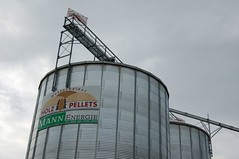
An interesting aspect of the New England Wood Pellet OSHA citations is that the facility was cited for combustible dust hazards. Recent congressional testimony has implied that OSHA is not doing enough to prevent future combustible dust accidents from occurring. If this is correct reasoning that OSHA is not doing its job, then why was the Jaffrey, New Hampshire wood pellet manufacturer cited by OSHA for combustible dust violations?
Recent Incidents
Over the past three months there’s been two combustible dust related explosions and fires at wood pellet manufacturing facilities in Corinth, ME and Marion, PA. Luckily in both instances there were no injuries, only tens of thousands of dollars in property damage. Reviewing the OSHA Integrated Management Information System (IMIS) incident database revealed no prior OSHA inspections of theses facilities.
Would a prior visit by an OSHA inspector prevented these accidents? Proponents of the Combustible Dust bill state that the Imperial Sugar explosion could have been prevented if an OSHA comprehensive combustible dust bill was implemented as recommended by the Chemical Safety Board (CSB), two years earlier. Armchair quarterbacking, the following day after the game has similar connotations placing blame on the team and coach because certain plays "would have or could have” been made to achieve a win.
OSHA has been in the combustible dust game years before the 2006 Combustible Dust Hazard Study was submitted by the CSB. The only problem in this day after the game is that OSHA has no fans watching. Instead emotional knee jerk reactions to seismic proportional events have detracted from sensible solutions to the complex combustible dust issue.
Knack for the NAICS
At the research facility in Santa Fe, Texas, the Combustible Dust Policy Institute recently discovered a unique niche manufacturing industry that provides an educational and informational thumbnail view of combustible dust generated from combustible particulate solids in the wood pellet manufacturing industry.
This is an ideal industry to review since it’s small in comparison to the hundreds of other establishments in NAICS 321999 (All Other Miscellaneous Wood Product Manufacturing) For reference, the OSHA Combustible Dust NEP, lists this NAICS in Appendix D-2 as Industries that may have Potential for Combustible Dust Explosions/Fires.
A quick search online in Wikipedia resulted in an excellent article on wood pellets and a helpful external link to the Pellet Fuel Institute. The PFI website mentions over 80 wood pellet manufacturers in North America producing over one million tons of pellets annually. That’s quite a bit of dust. So while methodically comparing all the wood pellet manufacturers on the PFI website with the OSHA (IMIS) incident database its possible to ascertain whether a facility has had prior OSHA inspections and if so any citations.
Looking for the Dust
Results of the research are quite revealing and unfold the facts concerning OSHA’s duties in protecting the worker and workplace from harm against combustible dust related fires and explosions. For instance, after an April 2003 inspection at an Allegheny Pellet Corporation wood pellet manufacturing plant in Youngsville, PA, the professional OSHA inspector cited the facility for combustible dust hazards using the General Duty Clause, Section 5(a)(1) of the Occupational Safety and Health Act of 1970:
“likely to cause death or serious physical harm to employees in that employees were exposed to burn injuries and dust explosions because material conveying equipment was not equipped with approved devices to prevent, mitigate, and/or control the hazards associated with fires and dust explosions.”
Specifically, the OSHA utilized national recognized standards of care in NFPA 664 Standard for the Prevention of Fires and Explosions in Wood Processing and Woodworking Facilities.
How much more comprehensive does an OSHA citation need to be? Especially if wood manufacturing facilities already have a history of violations for combustible dust infractions many years prior to the 2006 Chemical Safety Board comprehensive combustible dust regulation recommendations.
Nearly forty percent of the 70 wood pellet manufacturing facilities listed on the Pellet Fuel Institute website have been inspected by OSHA at least once. Only one of these facilities, American Wood Fibers, had a history of combustible dust related explosions and fires.
General Duty Clause Citation
Last year, almost one year to the day from the Imperial Sugar Refinery explosion,at Risley Pellet Solutions on February 6, 2007, a wood dust explosion blew the roof off of the building, injuring two people. There were no prior OSHA inspections found in the database before this accident. However, at the conclusion of the investigation, OSHA cited the facility using the General Duty Clause:
“explosion hazards while working in the wood pellet manufacturing facility. The employer did not design, install, and operate the wood pellet processing equipment according to national consensus standards and guidelines for wood processing and woodworking facilities including but not limited to: NFPA 664 Standard for the Prevention of Fires and Explosions in Wood Processing and Woodworking Facilities”,
All the above examples are only a small niche from NAICS 321999 (All Other Miscellaneous Wood Product Manufacturing). The OSHA Combustible Dust NEP comprises over five dozen additional NAICS. Through future time consuming research, dozens of other examples concerning OSHA’s combustible dust inspection and enforcement activities can utilized in illustrating that the agency is proactively seeking to protect the workplace from combustible dust hazards.
Conclusion
More creative energy needs to be directed in marshalling inspection and enforcement resources where combustible dust incidents are occurring in the manufacturing sector instead of the political rhetoric that the public and media has been observing in the constant parade of combustible dust congressional testimony.
This complex issue is not solely about Imperial Sugar but instead the nation’s entire manufacturing sector. OSHA cannot complete the task alone with its limited resources and needs the collaborative assistance and of all state and local agencies. So who is ready to lead and get the team back into the ball game in a win situation against future combustible dust explosions and fires?
Photo Credit: by rightee
8/11/08 -News Flash-Jaffrey wood pellet plant fire
Process of Making Wood Pellet Fuel
Photo Tour-New England Wood Pellet
From: SEN. SUNUNU PUSHES RENEWABLE ENERGY TAX CREDITS DURING VISIT TO NEW ENGLAND WOOD PELLET by
Source: US Fed News Service, Including US State News, 7/18/2008.
Via: 
Copyright © HT Media Ltd. All Rights Reserved.
Subscribe to:
Posts (Atom)


 RSS Feed Subscribe

