Combustible dust related fire in a sawdust hopper area of origin at a NAICS: 321212 Softwood Veneer and Plywood Manufacturing facility in California resulting in two injuries. Ironically the OSHA Combustible Dust National Emphasis Program (Reissued) does not recognize Softwood Veneer and Plywood Manufacturing facilities as having a potential for Combustible Dust Explosions/Fires in Appendix D-1 nor D-2 of the NEP.
With the commonality of hoppers throughout all manufacturing sectors having combustible dust fire and explosion hazards it is time OSHA comes to the realization that the ComDust NEP is ineffective in providing stakeholders a proactive awareness of combustible dust workplace hazards. Wouldn't it be prudent for OSHA to revise the current static ComDust NEP document in accordance with reality? Solely targeting specific processes while ignoring others is not the answer as we see in this unfortunate incident and many other countless NAICS Non-NEP fires and explosions. Time is way overdue in providing much needed awareness, outreach, and education throughout the entire gamut of the industrial sector.
These combustible dust related fires are a regular occurrence in the manufacturing and non-manufacturing sectors globally. In most instances they are non-consequential with no fatalities, injuries, or property damage. Best industry practice in minimizing the probability and severity of future incidents can be found in the recently revised edition of NFPA 664.
Tuesday, November 13, 2012
Two Injured Combustible Dust Related Fire in California

Monday, January 25, 2010
Webinar - Combustible Dusts in Industrial Ventilation Systems - Jan. 27, 2010
the ACGIH® Industrial Ventilation Committee is hosting this webinar aimed at educating the EH&S community on the importance of preparing for and preventing dust related incidents in industrial ventilation systems.
Over 60% of combustible dust General Duty Clause citation examples in the recent OSHA status report on Combustible Dust National Emphasis Program were for industrial ventilation issues. Jonathan F. Hale, MS, founder and co-owner of Air System Corporation & Diagnostics and Marty Schloss, PE and General Manager, southeast operations, for KBD/Technic, Inc., a CECO Environmental Company will provide attendees to the webinar with strategies in dust control and ignition control in preventing combustible dust related fires and dust explosions in addition vital information in maintaining current and future regulatory compliance.
This webinar has been approved by the American Board of Industrial Hygiene (ABIH) for .42 ABIH (IH) Certification Maintenance (CM) Point (. This webinar qualifies for .15 BCSP (SP) Continuance of Certification (COC) Point for Certified Safety Professionals. Participants seeking CM and/or COC points must attend the live webinar or view the archive and submit a final exam and evaluation. Certificates of Completion will be issued in a timely manner after receipt and completion of these items.
Who Should Attend this Webinar?
* Industrial Hygienists
* Occupational and Environmental Health Professionals
* Safety Professionals
* Environmental Engineers
* Plant Managers
ACGIH® Members: $292.50 Nonmembers: $325.00
Test and Certificate of Completion Only:*** $25.00 per person
Thursday, December 31, 2009
Combustible Dust Housekeeping with Vacuums
Vacuum Cleaning = First Defense Against Dust
In nearly all industries, the National Fire Protection Association (NFPA) recommends vacuum cleaning as the preferred first defense method of controlling fugitive dust. NFPA 654 states “vigorous sweeping or blowing down with steam or compressed air produces dust clouds.”
Informative article on housekeeping and the importance of using a vacuum in cleaning accumulations of combustible dust. Housekeeping violations were the second most cited violation according to the recent OSHA Combustible Dust NEP status report.
Posted via web from ComDust
Resources
Housekeeping Solutions by Walter L. Frank, P.E. and Mark L. Holcomb, MS, CIH, CSP
Friday, August 15, 2008
Michigan Composites Fire and Explosions
Yesterday morning 8/14/08, a devastating fire at Michigan Composites, a marine urethane core component facility on the south side of Nile, Michigan resulted in nearly a dozen fire departments responding with over 70 firefighters from two states. Residents in over 40 homes were evacuated and a three mile radius safety perimeter was implemented by fire protection officials.
News accounts have reported that workers heard numerous explosions following a machine that caught fire. Additionally, the owner stated the fire started in the dust collection system in a piece of sanding equipment. Hopefully the fire investigation results of the cause of the tragic fire will be forthcoming soon. In the meantime, workers at the plant no longer have a place of employment in the already economically depressed state of Michigan.
Urethane core components in the manufacturing subsector 326 Plastics and Rubber Products Manufacturing follow under NAICS 326150 Urethane and Other Foam Product (except Polystyrene) Manufacturing. Reviewing the OSHA Combustible Dust NEP, it's noted that this niche industry has a Potential for Combustible Dust Explosions/Fires in Appendix D-2.
The U.S Census Bureau historical statistics for NAICS 326150, highlights 623 establishments in the United States that utilize urethane in the manufacturing process. Since the beginning of the year, OSHA has inspected 19 of these establishments, or three percent, in the entire nation according to the Integrated Management Information System (IMIS) database.
California (74), North Carolina (60), Texas (47), and Michigan (44) are the leading states in this NAICS. So far none of Michigan 's NAICS 326150, that are similar to Michigan Composites have been inspected this year. Would an OSHA prior inspection prevented or reduced the severity of yesterdays devastating fire that wracked havoc on the Niles, Michigan community?
Composites is an interesting subject. In the maritime construction of yachts it is an excellent substitute for wood. When utilizing this building material, either low density polyisocyanurate foams or high density polyurethane foams are used . Manufacturers can combine the two to achieve even more diverse results. In the manufacturing process when utilizing polyisocyanates, additional provisions must be incorporated in the collection of dust due to its nature in shedding dust very easily.
A questions arises by the casual observer whether the above foams provided the dust in the dust collection system that contributed to the explosions and fire that was mentioned by the plant owner and workers in earlier news reports. Only time well tell the final results of the fire investigation. In the meantime, the other 622 establishments spread across the nation, with NAICS 326150 (Urethane and Other Foam Product (except Polystyrene) Manufacturing) can reassess their preventative and mitigative measures in reducing potential fire and explosion hazards from combustible particulate solids.
Recent Urethane/Plastic Combustible Dust Related Fires and Explosions
- 7/1/08 Cope Plastics -explosion/fire dust collector
- 5/6/08 Apex Millworks-fire in urethane dust bin/ sanding
- 3/30/08 Quality Cushion & Pad- polyurethane foam-fire/grinding
According to Niles Township Fire Chief Gary Brovold, the fire started when sparks coming from a sanding unit spread to what sales manager Brian Carpenter called "polyurethane saw dust."
Monday, August 11, 2008
Combustible Dust Parallax Solution
Not much news in the national media when OSHA proposed $135,200 in fines directed toward New England Wood Pellet, LLC in comparison to nearly $9 million imposed on the Imperial Sugar Corporation three days earlier. Since the sugar dust explosion in Port Wentworth, Georgia over six months ago there hasn’t been any other sugar refinery combustible dust fires or explosions in the United States. In contrast, over 70 combustible dust related fires and explosions have occurred in other areas of the manufacturing sector.
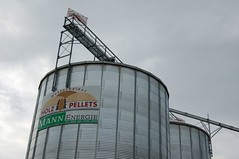
An interesting aspect of the New England Wood Pellet OSHA citations is that the facility was cited for combustible dust hazards. Recent congressional testimony has implied that OSHA is not doing enough to prevent future combustible dust accidents from occurring. If this is correct reasoning that OSHA is not doing its job, then why was the Jaffrey, New Hampshire wood pellet manufacturer cited by OSHA for combustible dust violations?
Recent Incidents
Over the past three months there’s been two combustible dust related explosions and fires at wood pellet manufacturing facilities in Corinth, ME and Marion, PA. Luckily in both instances there were no injuries, only tens of thousands of dollars in property damage. Reviewing the OSHA Integrated Management Information System (IMIS) incident database revealed no prior OSHA inspections of theses facilities.
Would a prior visit by an OSHA inspector prevented these accidents? Proponents of the Combustible Dust bill state that the Imperial Sugar explosion could have been prevented if an OSHA comprehensive combustible dust bill was implemented as recommended by the Chemical Safety Board (CSB), two years earlier. Armchair quarterbacking, the following day after the game has similar connotations placing blame on the team and coach because certain plays "would have or could have” been made to achieve a win.
OSHA has been in the combustible dust game years before the 2006 Combustible Dust Hazard Study was submitted by the CSB. The only problem in this day after the game is that OSHA has no fans watching. Instead emotional knee jerk reactions to seismic proportional events have detracted from sensible solutions to the complex combustible dust issue.
Knack for the NAICS
At the research facility in Santa Fe, Texas, the Combustible Dust Policy Institute recently discovered a unique niche manufacturing industry that provides an educational and informational thumbnail view of combustible dust generated from combustible particulate solids in the wood pellet manufacturing industry.
This is an ideal industry to review since it’s small in comparison to the hundreds of other establishments in NAICS 321999 (All Other Miscellaneous Wood Product Manufacturing) For reference, the OSHA Combustible Dust NEP, lists this NAICS in Appendix D-2 as Industries that may have Potential for Combustible Dust Explosions/Fires.
A quick search online in Wikipedia resulted in an excellent article on wood pellets and a helpful external link to the Pellet Fuel Institute. The PFI website mentions over 80 wood pellet manufacturers in North America producing over one million tons of pellets annually. That’s quite a bit of dust. So while methodically comparing all the wood pellet manufacturers on the PFI website with the OSHA (IMIS) incident database its possible to ascertain whether a facility has had prior OSHA inspections and if so any citations.
Looking for the Dust
Results of the research are quite revealing and unfold the facts concerning OSHA’s duties in protecting the worker and workplace from harm against combustible dust related fires and explosions. For instance, after an April 2003 inspection at an Allegheny Pellet Corporation wood pellet manufacturing plant in Youngsville, PA, the professional OSHA inspector cited the facility for combustible dust hazards using the General Duty Clause, Section 5(a)(1) of the Occupational Safety and Health Act of 1970:
“likely to cause death or serious physical harm to employees in that employees were exposed to burn injuries and dust explosions because material conveying equipment was not equipped with approved devices to prevent, mitigate, and/or control the hazards associated with fires and dust explosions.”
Specifically, the OSHA utilized national recognized standards of care in NFPA 664 Standard for the Prevention of Fires and Explosions in Wood Processing and Woodworking Facilities.
How much more comprehensive does an OSHA citation need to be? Especially if wood manufacturing facilities already have a history of violations for combustible dust infractions many years prior to the 2006 Chemical Safety Board comprehensive combustible dust regulation recommendations.
Nearly forty percent of the 70 wood pellet manufacturing facilities listed on the Pellet Fuel Institute website have been inspected by OSHA at least once. Only one of these facilities, American Wood Fibers, had a history of combustible dust related explosions and fires.
General Duty Clause Citation
Last year, almost one year to the day from the Imperial Sugar Refinery explosion,at Risley Pellet Solutions on February 6, 2007, a wood dust explosion blew the roof off of the building, injuring two people. There were no prior OSHA inspections found in the database before this accident. However, at the conclusion of the investigation, OSHA cited the facility using the General Duty Clause:
“explosion hazards while working in the wood pellet manufacturing facility. The employer did not design, install, and operate the wood pellet processing equipment according to national consensus standards and guidelines for wood processing and woodworking facilities including but not limited to: NFPA 664 Standard for the Prevention of Fires and Explosions in Wood Processing and Woodworking Facilities”,
All the above examples are only a small niche from NAICS 321999 (All Other Miscellaneous Wood Product Manufacturing). The OSHA Combustible Dust NEP comprises over five dozen additional NAICS. Through future time consuming research, dozens of other examples concerning OSHA’s combustible dust inspection and enforcement activities can utilized in illustrating that the agency is proactively seeking to protect the workplace from combustible dust hazards.
Conclusion
More creative energy needs to be directed in marshalling inspection and enforcement resources where combustible dust incidents are occurring in the manufacturing sector instead of the political rhetoric that the public and media has been observing in the constant parade of combustible dust congressional testimony.
This complex issue is not solely about Imperial Sugar but instead the nation’s entire manufacturing sector. OSHA cannot complete the task alone with its limited resources and needs the collaborative assistance and of all state and local agencies. So who is ready to lead and get the team back into the ball game in a win situation against future combustible dust explosions and fires?
Photo Credit: by rightee
8/11/08 -News Flash-Jaffrey wood pellet plant fire
Process of Making Wood Pellet Fuel
Photo Tour-New England Wood Pellet
From: SEN. SUNUNU PUSHES RENEWABLE ENERGY TAX CREDITS DURING VISIT TO NEW ENGLAND WOOD PELLET by
Source: US Fed News Service, Including US State News, 7/18/2008.
Via: 
Copyright © HT Media Ltd. All Rights Reserved.


 RSS Feed Subscribe

