Pages

Monday, August 11, 2008

Combustible Dust Parallax Solution


Not much news in the national media when OSHA proposed $135,200 in fines directed toward New England Wood Pellet, LLC in comparison to nearly $9 million imposed on the Imperial Sugar Corporation three days earlier. Since the sugar dust explosion in Port Wentworth, Georgia over six months ago there hasn’t been any other sugar refinery combustible dust fires or explosions in the United States. In contrast, over 70 combustible dust related fires and explosions have occurred in other areas of the manufacturing sector.
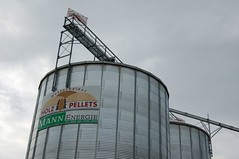

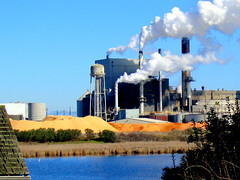
An interesting aspect of the New England Wood Pellet OSHA citations is that the facility was cited for combustible dust hazards. Recent congressional testimony has implied that OSHA is not doing enough to prevent future combustible dust accidents from occurring. If this is correct reasoning that OSHA is not doing its job, then why was the Jaffrey, New Hampshire wood pellet manufacturer cited by OSHA for combustible dust violations?

Recent Incidents
Over the past three months there’s been two combustible dust related explosions and fires at wood pellet manufacturing facilities in Corinth, ME and Marion, PA. Luckily in both instances there were no injuries, only tens of thousands of dollars in property damage. Reviewing the OSHA Integrated Management Information System (IMIS) incident database revealed no prior OSHA inspections of theses facilities.

Would a prior visit by an OSHA inspector prevented these accidents? Proponents of the Combustible Dust bill state that the Imperial Sugar explosion could have been prevented if an OSHA comprehensive combustible dust bill was implemented as recommended by the Chemical Safety Board (CSB), two years earlier. Armchair quarterbacking, the following day after the game has similar connotations placing blame on the team and coach because certain plays "would have or could have” been made to achieve a win.

OSHA has been in the combustible dust game years before the 2006 Combustible Dust Hazard Study was submitted by the CSB. The only problem in this day after the game is that OSHA has no fans watching. Instead emotional knee jerk reactions to seismic proportional events have detracted from sensible solutions to the complex combustible dust issue.

Knack for the NAICS
At the research facility in Santa Fe, Texas, the Combustible Dust Policy Institute recently discovered a unique niche manufacturing industry that provides an educational and informational thumbnail view of combustible dust generated from combustible particulate solids in the wood pellet manufacturing industry.

This is an ideal industry to review since it’s small in comparison to the hundreds of other establishments in NAICS 321999 (All Other Miscellaneous Wood Product Manufacturing) For reference, the OSHA Combustible Dust NEP, lists this NAICS in Appendix D-2 as Industries that may have Potential for Combustible Dust Explosions/Fires.

A quick search online in Wikipedia resulted in an excellent article on wood pellets and a helpful external link to the Pellet Fuel Institute. The PFI website mentions over 80 wood pellet manufacturers in North America producing over one million tons of pellets annually. That’s quite a bit of dust. So while methodically comparing all the wood pellet manufacturers on the PFI website with the OSHA (IMIS) incident database its possible to ascertain whether a facility has had prior OSHA inspections and if so any citations.

Looking for the Dust
Results of the research are quite revealing and unfold the facts concerning OSHA’s duties in protecting the worker and workplace from harm against combustible dust related fires and explosions. For instance, after an April 2003 inspection at an Allegheny Pellet Corporation wood pellet manufacturing plant in Youngsville, PA, the professional OSHA inspector cited the facility for combustible dust hazards using the General Duty Clause, Section 5(a)(1) of the Occupational Safety and Health Act of 1970:

“likely to cause death or serious physical harm to employees in that employees were exposed to burn injuries and dust explosions because material conveying equipment was not equipped with approved devices to prevent, mitigate, and/or control the hazards associated with fires and dust explosions.”

Specifically, the OSHA utilized national recognized standards of care in NFPA 664 Standard for the Prevention of Fires and Explosions in Wood Processing and Woodworking Facilities.

How much more comprehensive does an OSHA citation need to be? Especially if wood manufacturing facilities already have a history of violations for combustible dust infractions many years prior to the 2006 Chemical Safety Board comprehensive combustible dust regulation recommendations.

Nearly forty percent of the 70 wood pellet manufacturing facilities listed on the Pellet Fuel Institute website have been inspected by OSHA at least once. Only one of these facilities, American Wood Fibers, had a history of combustible dust related explosions and fires.

General Duty Clause Citation
Last year, almost one year to the day from the Imperial Sugar Refinery explosion,at Risley Pellet Solutions on February 6, 2007, a wood dust explosion blew the roof off of the building, injuring two people. There were no prior OSHA inspections found in the database before this accident. However, at the conclusion of the investigation, OSHA cited the facility using the General Duty Clause:

“explosion hazards while working in the wood pellet manufacturing facility. The employer did not design, install, and operate the wood pellet processing equipment according to national consensus standards and guidelines for wood processing and woodworking facilities including but not limited to: NFPA 664 Standard for the Prevention of Fires and Explosions in Wood Processing and Woodworking Facilities”,

All the above examples are only a small niche from NAICS 321999 (All Other Miscellaneous Wood Product Manufacturing). The OSHA Combustible Dust NEP comprises over five dozen additional NAICS. Through future time consuming research, dozens of other examples concerning OSHA’s combustible dust inspection and enforcement activities can utilized in illustrating that the agency is proactively seeking to protect the workplace from combustible dust hazards.

Conclusion
More creative energy needs to be directed in marshalling inspection and enforcement resources where combustible dust incidents are occurring in the manufacturing sector instead of the political rhetoric that the public and media has been observing in the constant parade of combustible dust congressional testimony.

This complex issue is not solely about Imperial Sugar but instead the nation’s entire manufacturing sector. OSHA cannot complete the task alone with its limited resources and needs the collaborative assistance and of all state and local agencies. So who is ready to lead and get the team back into the ball game in a win situation against future combustible dust explosions and fires?

Photo Credit: by rightee
8/11/08 -News Flash-Jaffrey wood pellet plant fire

Process of Making Wood Pellet Fuel


Photo Tour-New England Wood Pellet


Friday, August 8, 2008

Paper Mills Exempt From ComDust NEP


The recent box manufacturing plant fire Thursday evening at Longview Fibre in Yakima, Washington brings to mind a combustible dust related fire three months earlier at Lincoln Paper & Tissue in Lincoln, Maine. In the Washington incident, the facility fire sprinkler system in conjunction with a team effort from the the industrial fire brigade prevented the fire from destroying the facility.

In contrast, with the assistance from local mutual aid, Lincoln Fire Department Fire-fighters subdued the New England blaze after a three hour battle. Luckily no one was injured in both instances, only damaged egos of plant managers and owners. The Longview facility in the Pacific Northwest, sustained an estimated $100,000 in damages according to news reports from the Yakima Herald-Republic.

Inspectors Find No Dust
Less than three weeks prior to the New England paper mill fire, the Federal OSHA Augusta, Maine office cited the facility for electrical, hazardous materials, and exit route hazards. According to news reports from WABI TV, the facility experienced a similar fire months earlier in January 2008. No mention of dust hazards are noted in the online OSHA accident and citation report.

Reviewing OSHA inspection reports for the Longview Fibre paints a revealing picture. Over the past decade Washington OSHA inspectors visited Longview Fibre Washington plants over two dozen times for complaints, referrals, follow-ups, and planned visits. The last citation "serious" was in 11/02/05, for an Ammonia (NH3) infraction. No issues concerning a combustible dust hazard were noted at this facility either.

NAICS Emphasis
The current OSHA
Combustible Dust National Emphasis Program (NEP) initially became effective on October 18, 2007 and was reissued March 12, 2008, over a month after the Imperial Sugar Refinery sugar dust explosion. The only difference between the two NEPS, besides the change of the date at the top right hand corner, is that the newer directive divides the NAICS into Appendix D-1 and D-2 with two diverse classifications:


  • Industries with More Frequent and/or High Consequence Combustible Dust Explosions/Fires D-1

  • Industries that may have Potential for Combustible Dust Explosions/Fires D-2
In either case, the Paper Manufacturing subsector, with Industry Groups of Pulp, Paper, and Paperboard Mills and Converted Paper Product Manufacturing are not covered in the revised OSHA Combustible Dust (NEP).

Amazingly, NAICS 322211/corrugated and solid fiber box manufacturing at Longview Fibre and NAICS: 322121/paper mills at Lincoln Paper & Tissue are not under the OSHA radar as having a combustible dust hazard present at their facilities. Yet combustible dust related incidents can still occur at hundreds of other facilities in the Paper Manufacturing sector without proactive preventative and mitigative measures being addressed in addition to not being listed in the OSHA Combustible Dust NEP.

State Dust NEP Voluntary
The most stunning aspect concerning the OSHA Combustible Dust NEP, is that for states like Washington that have there own OSHA program similar to Cal-OSHA, is that State plan participation in this national emphasis program is strongly encouraged but is not required.

Thats correct, participation is voluntary. The Combustible Dust Policy Institute recently talked with an official from Washington OSHA and it was reaffirmed that the state does not have an emphasis program for combustible dust due to financial resource considerations.

Not If, But When
Combustible dust related fires and explosions will continue throughout the year in the manufacturing sector. At the present rate, the Combustible Dust Policy Institute has projected with approximately 12 incidents/monthly, an additional 50 combustible dust related fires and explosions will occur before years end.

Don't gamble with borrowed time, even if your facility is not a listed NAICS in the OSHA Combustible Dust NEP and generates combustible dust from combustible particulate solids. Perform a process hazard analysis now and have your dust tested for ignition sensitivity and explosion severity immediately as time permits while the sands in the hour glass are dwindling.

Photo Credit: by Jan Tik

OSHA Grain Facility Standard Not Working


If the OSHA grain facility standard is suppose to reduce the prevalence of combustible dust accidents in the grain industry here in the United States, then why has 10 grain facility explosions occurred over the past ten months? Since the tragic Imperial Sugar Refinery dust explosion, the Combustible Dust Policy Institute has recorded on the Google Grain Facility Incident Map through online news reports, 17 combustible dust fires and explosions at grain facilities with 35% of these events occurring as explosions.

In contrast, over the past six months with over 70 combustible dust explosions and fires in the manufacturing sector, 22 % have been explosions. Surprisingly, the number of injuries when comparing to combustible dust events between the two industry sectors are approximately the same.


Acceptable Explosions
Recent Senate testimony at a combustible dust hearing by governmental officials have stated that the number of grain facility combustible dust fires and explosions have been reduced since the OSHA Grain Facility Standard was introduced two decades ago. So what is an acceptable number of accidents if combustible grain dust explosions and fires are happening at the same pace as incidents in manufacturing plants?


The only difference between the two is the tragic event at Imperial Sugar, which gained the attention of congressional leaders to take preventative action. It's only a matter a time before the magnitude of the Georgia event catches up with the grain industry.

Take a fast rewind over 3o years ago, to 1977 when several grain silo facilities eerily exploded within days of each other creating a heavy death toll. It was these events that initiated legislation for the OSHA Grain Facility Standard. Earthquakes on the West Coast of high magnitude in metropolitan areas have the same effect. The events are spaced out many years apart but still result in high fatalities, injuries, and extreme economic damage.


Right Idea...Misguided Approach
It's commendable that legislators desire OSHA regulations with protective action to prevent further workplace injuries and fatalities. The problem is with the methodology in achieving this goal. For example, regarding the case with Imperial Sugar and the huge loss of life, concerned legislators were immediately outraged as was the public. Something had to get done and quickly to prevent additional occurrences of accidents of that magnitude. Quick it was, then ensuing congressional testimony began to turn into attacks on OSHA, the director of OSHA, and even the Secretary of Labor.


This is where the problem arose in drafting the Worker Protection Against Combustible Dust Explosion and Fires Act (H.R. 5522). Emotions entered into the picture instead of a reasoned approach which should of consulted all stakeholders concerning life safety, structural integrity, mission continuity, and mitigation of fire and explosions as outlined in the National Fire Protection Association (NFPA) standards.

Jurisdictional Collaboration
Congress needs to reevaluate the stark and unyielding provisions of the pending combustible dust bill, which has all the good intentions of accident prevention and worker safety. Instead the local jurisdictional aspect with collaborative partnerships must be aligned between federal, state, and local entities in the prevention and mitigation of future combustible dust incidents.

Already it is proven the federal provision in the OSHA Grain Facility Standard does not reduce the occurrences of combustible grain dust incidents. How can it? Doesn't take much higher math to figure there are not enough OSHA inspectors to inspect all the grain facilities on a regular basis. Besides it's not up to the federal government to ensure a facility will not go off like a Chinese bottle rocket to the moon at moments notice.

An excellent example of local jurisdictional cooperation with state, local, and federal alliances is Homeland Security. Billions of dollars have gone into that program and millions more too local and state jurisdictions. Is Homeland Security working? Maybe it's too early to tell. But the resources have been spent. Isn't our nations manufacturing sector just as vital or important?

Photo Credit: OSHA

Sunday, August 3, 2008

Ill Advised Combustible Dust Bill


The current combustible dust bill waiting for a vote in the Senate and passed earlier in the House is a faulty draft of proposed OSHA health and safety legislation. Posing as a quick fix with no bite, due to the lack of OSHA resources. Policy- makers failed to take in account the magnitude of the problem with the prevalence of combustible dust fires and explosions occurring across a wide swath of the manufacturing sector.


Furthermore, utilizing OSHA’s Combustible Dust National Emphasis Program (NEP), as recommended by the Chemical Safety Board does not fully address many manufacturing sectors that are experiencing combustible dust explosions and fires that were not included in the NEP.

North America Industrial Classification System (NAICS)
Of particular importance when assessing industries that have a frequent and/or high consequence of combustible dust explosions and fires is an understanding of the North America Industrial Classification System (NAICS), that OSHA utilizes in Appendix D-1 of the Combustible Dust NEP.

NAICS is a six digit hierarchical industry coding and classification system that the Bureau of Labor and the U.S Census Bureau also utilizes to measure economic activity in the United States. It enables policy-makers across a wide spectrum of government to understand the business cycle and how it relates to the flow of trade.

U.S. NAICS example

  • Sector 33 Manufacturing
    • Subsector 339 Miscellaneous Manufacturing
      • Industry Group 3399 Other Miscellaneous Manufacturing
        • Industry 33994 Office Supplies (except Paper) Manufacturing
          • U. S. Industry 339941 Pen and Mechanical Pencil Manufacturing
Older Standard Industrial Classification (SIC) system
NAICS groups are divided into 20 sectors, with five sectors goods-producing and fifteen services-producing sectors. The NAICS system replaced the older Standard Industrial Classification (SIC) system beginning in 1997. Additionally, there are 474 NAICS industries in the manufacturing sector from a total of 1,170 NAICS industries in contrast to the 1,004 found in the previous SIC.

A confusing aspect of the 2006 Chemical Safety Board, Combustible Dust Hazard Study is that the data spreadsheet referenced combustible dust incidents from 1980-2005 with the old SIC system. For the user of the data, it very difficult to ascertain the specific national industry that experienced combustible dust accidents. In contrast, OSHA began using the North American Industry Classification System (NAICS) for industry identification back in January 2003.

In addition to Appendix D-1, with the listing of 17 manufacturing NAICS in the OSHA NEP, there is Appendix D-2, listing another 50 manufacturing NAICS. OSHA believes these industries may have potential for combustible dust explosions/fires instead of a high frequency rate like in D-1.

Invisible Industries
This is where the problem arises, in solely relying on the OSHA Combustible Dust NEP as a yardstick for whether or not a manufacturing facility has a dust problem or not. The Combustible Dust Policy Institute has discovered through intensive research utilizing media reports and interviews over the past six months that 64% of the 70 combustible dust related explosions and fires since the Imperial Sugar Refinery explosion are not listed in Appendix D-1/D-2 NAICS list of the OSHA Combustible Dust National Emphasis Program (NEP).

Furthermore, of the 16 combustible dust explosions that have occurred, only 50% of the NAICS are listed in the NEP. How can a sound preventative safety policy be instituted if over 50% of the nation’s manufacturing sectors are ignored?

Photo Credit: by exfordy on Flickr "Creative Commons"

Saturday, August 2, 2008

Dust Explosions Prior to Senate Hearing

Three days prior to the July 29, 2008 Senate Hearing on workplace Safety, “ Dangerous Dust: Is OSHA Doing Enough to Protect Workers,” ICO Polymers in Asbury, New Jersey witnessed an early morning explosion that severely burned one worker who is in critical condition with burns to his face and arms from the explosion in the plastic pulverizing unit. In the same week four other combustible dust incidents occurred throughout the nation. The cause at ICO Polymers is yet to be determined but all the ingredients are there again for another combustible dust explosion.

Prior Explosions
For instance, one year ago, last July, the same facility experienced a similar event that after an OSHA accident investigation, was deemed a combustible plastic dust explosion in Building One’s Ambient Mill. Where micronized powders of polypropylene, polystyrene, and ethylene were allowed to accumulate, which ignited and exploded, injuring a worker who suffered burns to his hands and back of his head. In this recent incident, New Jersey Fire Officials closed the facility due to the extensive structural damages to the building, which posed an imminent threat.

Recent news reports in the Hunterdon County Democrat, uncovered additional fires at the ICO Polymers facility in 1999 and several explosions in 1997, 1990, and 1989, which also injured workers. In earlier years the plant was owned by Wedco. Change of ownership has not reduced the severity or magnitude of injuries with the events reoccurring in an alarming manner.

Combustible Dust Legislation
A troubling aspect of the recent Senate hearing on combustible dust in conjunction with the recent explosion in New Jersey is that our nation’s legislators and policy makers don’t seem to understand the magnitude of the complex issue concerning combustible dust.

Since the “Worker Protection Against Combustible Dust Explosions and Fires Act of 2008,” was introduced by Congressman George Miller (D-CA) on March 4, 2008 as a result of the February 7, 2008 catastrophic Imperial Sugar Refinery dust explosion in Port Wentworth, Georgia there have been prior hearings held in Congress. Basically, the message has been the same at all the congressional hearings, that there is a problem with the hazards of combustible dust in the nation’s manufacturing sector workplace.

NFPA Combustible Dust Standards
Yet no consensus solutions have been proposed. Instead sole blame has been placed on OSHA which doesn’t have a general industry comprehensive combustible dust standard like the grain facility standard that is already part of OSHA work-place health and safety standards since 1989.

The central aspect of the proposed legislation is incorporating National Fire Protection Association (NFPA) combustible dust standards. This is would be great if OSHA had enough resources to inspect the thousands of manufacturing plants in the nation but it doesn’t. So how will such regulations be enforced unless Congress appropriates additional funding to OSHA? It’s like declaring war yet not sending the troops for lack of funding.

Manufacturing facilities are already required to follow NFPA combustible dust standards through general consensus and nationally recognized standards of care which is recognized by the American National Standards Institute (ANSI). When a violation of combustible dust is found, OSHA inspectors can cite the facility under the General Duty Clause (GDC), Section 5(a)(1) of the Occupational Safety and Health Act.

Local Jurisdiction Enforcement
Local fire and building inspectors that already conduct local inspections need to be utilized more thoroughly in the prevention and mitigation of future combustible dust fires and explosions. These are the professionals that are on the front lines daily and interact daily with local fire departments concerning specific issues that need to be addressed concerning the life safety and structural integrity of commercial buildings.

Fire codes such as the ICC International Fire Code and NFPA Uniform Fire Code already address combustible dust with references to the numerous NFPA combustible dust standards. Following the 2006 Combustible Dust Hazard Investigation, the Chemical Safety Board in addition to recommending an OSHA comprehensive combustible dust standard also outlined that many fire and building inspectors are not knowledgeable concerning combustible dust hazards.

Why hasn’t this aspect of preventing and mitigating future combustible dust incidents been included in congressional testimony? Instead attention has solely been directed at the recent Imperial Sugar incident and placing blame on OSHA as a solution in the policymaking process.

Conclusion
While all the political spin and maneuvering between both political parties concerning labor and business has been taking place over the past five months in regards to pending combustible dust legislation, over 70 combustible dust related fires and explosions have occurred in the nation’s manufacturing sector. The Combustible Dust Policy Institute has discovered through research that approximately 20% of these events are combustible dust explosions and an alarming number are reoccurring like the ICO Polymers accident last week.

A comprehensive combustible dust bill will not solve the problem of combustible dust fires and explosions. It’s only through the cooperation between all stakeholders throughout the national, regional, and local levels that the complex issue of combustible dust can be properly addressed in lessening the severity of future incidents.

Tuesday, July 15, 2008

Fire & Explosion Protection, ATEX Forum

Plant managers including health and safety personnel that are seeking additional information concerning explosion and fire protection at their facility that generates combustible dust will find the Bulk-Online Powder/Bulk Portal Forum on Fire & Explosion Protection, ATEX, very helpful.

Numerous topics in the ATEX forum have been posted concerning the prevention and mitigation of combustible dust fires and explosions from professionals around the world. ATEX, or ATmosphères EXplosibles(French) is the European Union directive concerning combustible dust, which applies to best engineering practices (ATEX 95) and workerplace health and safety standards (ATEX 137) in potentially explosive atmospheres such as flammable liquids, gases, and vapors.

This is where the disconnect currently is, at manufacturing facilities in the United States that handle combustible particulates solids which generate combustible dust. Not realizing and acknowledging that combustible dust is under the same umbrella as flammable liquids, gases, and vapors that create explosive atmospheres is a recipe for disaster. Such as was experienced February 7, 2008 at the catastrophic Imperial Sugar Refinery explosion and over 60 combustible dust fires and explosions that have occurred since then.

The Industrial Fire, Safety and Security Conference held at the Reliant Center in Houston, Texas on February 4-6 2009 will bring together a diverse spectrum of EH&S, HazMat, security, rescue, medical, and other emergency management stakeholders to a premier event in conjunction with providing the knowledge and information that combustible dust is synonymous with potentially explosive atmospheres. Lets break the disconnect in the prevention of future preventable and predictable combustible dust related fires and explosions occurring in manufacturing facilities throughout the United States.


Questions, Problems, Feedback? Please send email by clicking this link...Thanks

©Copyright 2008-2012. Combustible Dust Policy Institute
The information in http://dustexplosions.blogspot.com/ is not meant to be a substitute for the Code of Federal Regulations (CFR), Federal Register, and other OSHA documents, which should serve as the primary source of regulatory guidance. The information on this site should not be used in place of appropriate technical or legal advice related to your company's specific circumstances. Combustible Dust Policy Institute tries to provide quality information, but we make no claims, promises or guarantees about the accuracy, completeness, or adequacy of the information contained in or linked to this web site and its associated sites. Combustible Dust Policy Institute has no liability arising from or relating to the use, interpretation, or application of the information or its accuracy or inaccuracy. Copyright notice: All materials in this site are copyrighted by the Combustible Dust Policy Institute. No materials may be directly or indirectly published, posted to Internet and intranet distribution channels, broadcast, rewritten for broadcast or publication or redistributed in any medium without permission.