Pages

Saturday, March 23, 2013

OSHA Fire Prevention Plans (FPP) & Hazard Assessments Ignored by Many

Figure 6. Number of Combustible Dust Related Violations

Figure 6. "Number of Combustible Dust Related Violations" OSHA Status Report on Combustible Dust National Emphasis Program (NEP) does not even note any combustible dust related violations for "1910.39 Fire prevention plans." How odd especially with requirements of a written plan on proper handling and storage procedures for hazardous materials, potential ignition sources and their control, and the type of fire protection equipment necessary to control each major hazard. In addition to procedures to control accumulations of flammable and combustible waste materials in conjunction with procedures for regular maintenance of safeguards installed on heat-producing equipment to prevent the accidental ignition of combustible materials.” I guess combustible dust is not considered a combustible waste material nor a hazardous material?

Congressional Proposed Interim Standard
Since OSHA 1910.39 Fire prevention plans have been ignored regarding combustible dust hazards they will now be included in the reintroduced combustible dust legislation "Worker Protection Against Combustible Dust Explosions and Fires Act of 2013," for an OSHA interim combustible dust standard. Elements in an interim standard will include:

(2)written program that includes provisions for hazardous dust inspection, testing, hot work, ignition control, and housekeeping, including the frequency and method or methods used to minimize accumulations of combustible dust on ledges, floors, equipment, and other exposed surfaces.

(3) Requirements for engineering controls, administrative controls, and operating procedures, including means to control fugitive dust emissions and ignition sources, and the safe use and maintenance of process equipment and dust collection systems and filters.

(4) Requirements for workplace inspection and housekeeping to prevent accumulation of combustible dust in places of employment in such depths that it can present explosion, deflagration, or other fire hazards, including safe methods of dust removal.

(6) Requirements to provide written safety and health information and annual training to managers and employees and their representatives, including housekeeping procedures, hot work procedures, preventive, predictive, and periodic maintenance procedures, common ignition sources, and lock-out, tag-out procedure.

NOTE: OSHA Fire Prevention Plans (FPP) only required if all of your employees evacuate immediately during a fire emergency (page 15 .pdf) or if one of these three host standards apply: CFR 1910.1047(h)(1)(iii): Ethylene Oxide, CFR 1910.1050(d)(1)(iii): Methylenedianiline, or CFR 1910.1051(j): 1,3-Butadiene.

Additionally no mention in the 2009 OSHA Status Report on Combustible Dust National Emphasis Program regarding combustible dust related violations in failure to have a certified written Hazard assessment 1910.132(d)(1) “The employer shall assess the workplace to determine if hazards are present, or are likely to be present...” Legislators did not forget that one either in the reintroduced combustible dust legislation with (1) Requirements for hazard assessment to identify, evaluate, and control combustible dust hazards.

OSHA Citations: Fire Prevention Plans (FPP) and Certified Hazard Assessments
Question is how can there be hundreds of combustible dust related incidents annually with over 500 in 2011 according  to a CDPI preliminary analysis of NFIRS data, if the required OSHA written Fire Prevention Plans (FPP) and certified Hazard Assessments plans are adhered to? Is it just a paper chase and stakeholders doing nothing more than filing the required written plans in the office file cabinet?

Federal OSHA citations for the period October 2011 through September 2012 in the Lumber And Wood Products industries, (Except Furniture) there was no Federal OSHA citations for 1910.39 - Fire prevention plans (FPP). With the over 500 ComDust related incidents in 2011 according to a preliminary NFIRS analysis, the Lumber And Wood Products industries experienced over 16% of the incidents. How can there be so many incidents yet in the same vein FPP is adhered to regarding regular maintenance of safeguards installed on heat-producing equipment to prevent the accidental ignition of combustible materials?

This observation is not meant to solely pick on the Lumber And Wood Products as there are dozens of other diverse industries handling combustible particulate solids. For example out of the over 12,700 Federal OSHA citations at 2,419 facilities in the manufacturing sector from October 2011 through September 2012, only two (2) Federal OSHA citations for 1910.39 - Fire prevention plans (FPP)  So the odds of receiving an OSHA citation for FPP in that time period was 0.016% out of the nearly 13,000 citations. 


Conclusion
The problem is intensified when viewing the OSHA website  on combustible dust hazards where, "Federal OSHA standards are mandatory; they include provisions that address certain aspects of combustible dust hazards. Some are industry-wide and others and industry-specific." No mention at all regarding certified written hazard assessment 1910.132(d)(1) nor any note of 1910.39 Fire prevention plans. Additionally, in the OSHA ComDust NEP  numerous OSHA CPL's listed in the reference section yet CPL 2-1.037, Compliance Policy for Emergency Action Plans and Fire Prevention Plans excluded. Wouldn't it be prudent for all global stakeholders to implement the protections of  hazard assessments and fire protection plans now instead of waiting for the results of proposed combustible dust legislation and regulations? 

Tuesday, March 12, 2013

Building Signage Communicating Hazards Will Save Lives

Truss Signage

International Fire Code (2012) Appendix J - Building Information Sign, provides excellent guidance in communicating high-hazard occupancies to fire crews responding to combustible dust related fires and explosions. Many fire departments are not aware of the inherent special risk of a HazMat nature when responding to these types of incidents. The situation is especially critical with lack of resources for many jurisdictions in conducting pre-site visits as outlined in NFPA 1620 Standard for Pre-Incident Planning.

Truss signage,” is an excellent example currently implemented in numerous jurisdictions throughout the nation in preventing injures and fatalities of fire-fighters due to truss system failures. Similar signage as referenced in the International Fire Code (2012) and NFPA 704 will effectively communicate hazards to fire departments responding to facility combustible dust related incidents.

“Fire Chief did not receive an MSDS sheet from facility until the next day. Fire Chief added that if he had the MSDS sheet at the time of the incident his tactical decisions would have been different.” –excerpt accident report. This example illustrates if High-Hazard H-2 occupancy signage was affixed to the outside of buildings, fire crews would know upon arriving at the fireground that deflagration hazards are present. NFPA 704 signage produces similar results. A flammable vapor cloud explosion (VCE) is not much different than the severity of a wood dust deflagration as both involve damaging pressures waves followed by slower moving flame fronts of destructive flammable gases.

Saturday, March 2, 2013

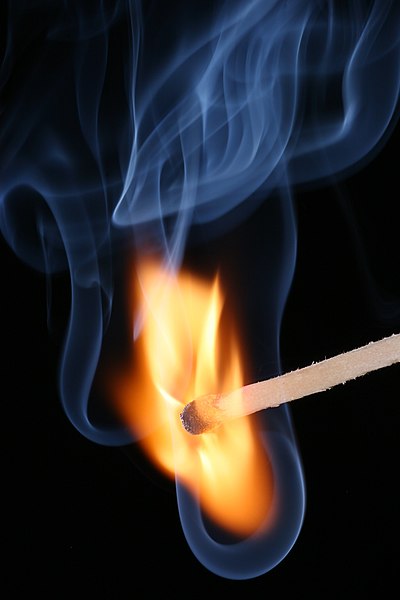
21st Century National Phenomena, Combustible Dust Fires and Explosions?

Photo Credit: Sebastian Ritter

1973 Report of the President's Commission on Fire Prevention and Control "In pursuit of answers, the Commission has held hearings in five widely scattered cities, heard the testimony of more than 100 witnesses filling thousands of pages of transcript, and spent countless hours learning and deliberating in both formal and informal sessions.”

"In addition, special studies have been prepared by Commission staff and by a dozen experts from government and private groups exploring particular problems and their alternative solutions. Over 130 position papers were filed with the Commission advocating different approaches to the fire problem."

Fire and the Built Environment in Chapters 8-12 of the America Burning report notes fire hazards of Flammable Fabrics, Fireworks, Transport of Hazardous Materials, Aircraft Fire Safety, Marine Fire Safety, Motor Vehicle Safety, and Railroad Transportation Fire Safety. In contrast, combustible dust fire and explosion hazards were excluded from the report.

Fifteen years later, in 1987 a national workshop was held in Virginia on America Burning Revisited where again no reference to combustible dust fire and explosion hazards in the built environment. Ironically the OSHA Grain Handling Facilities Final Rule was published fours weeks after the national workshop on December 31, 1987.

Why is there a national disconnect between combustible dust related fires and catastrophic dust explosions? Eliminating combustible dust related fire hazards (heat, fuel, or oxygen) prevents a catastrophic combustible dust explosion or flash fire from even occurring. All five of the catastrophic combustible dust explosions the U.S. Chemical Safety Board (CSB) completed accident investigations on had a history of "near miss" non-consequential combustible dust related fires.

Friday, February 15, 2013

Inaccurate Data Distorts Complexities of Combustible Dust Hazards

Columbia Graphophone of 1901.

It's like a broken record going round and round for nearly a decade with inaccurate incident data distorting the complexities of workplace combustible dust hazards. Now the Democrat House Committee on Education and the Workforce has reintroduced a combustible dust bill  (H.R. 691) utilizing the same inaccurate incident data (approximately 10 incidents annually) as OSHA utilized in the 2009 Combustible Dust Advanced Notice of Proposed Rulemaking ANPRM (page 2 .pdf Table 1).

CSB stated in a disclaimer from their 2006 Dust Hazard Study, "The combustible dust incidents included here are likely only a small sampling, as no federal or state agency keeps specific statistics on combustible dust incidents..." This is an inaccurate statement especially since local fire departments, state fire marshals, and the National Fire Data Center/U.S Fire Administration of the Department of Homeland Security collects specific data on combustible dust incidents in accordance with the Federal Fire Prevention and Control Act of 1974 with the National Fire Incident Reporting System (NFIRS). For instance NFIRS data element #94 (dust, fiber, or lint. Includes sawdust) as item first ignited is entered in the NFIRS Fire Module (page 104 .pdf) by local fire departments following a response to an incident.

The Combustible Dust Policy Institute (CDPI) conducted preliminary analysis of NFIRS 2006 and 2011 combustible dust related incident data and determined between 500-600 combustible dust related incidents occurring annually in manufacturing plants, not 10-15 annually as indicated in the 2009 OSHA Combustible Dust ANPRM published in the Federal Register and recent Democrat House Committee on Education and the Workforce press release.

If congressional and administrative policy makers cannot accurately identify the magnitude of the combustible dust problem then how can it be expected to comprehensively evaluate the situation so as to develop cost effective control measures in protecting the nation’s valued workforce?

Comparing the partial success of the OSHA Grain Facility Standard in mitigating and preventing grain explosions to non-grain facilities generating combustible dust is like comparing apples to oranges. There are tens of thousands of facilities in a multitude of sectors in addition to manufacturing with combustible dust fire and explosion hazards compared to the much smaller number of grain facilities.

There is no doubt a standard or regulation is needed either through legislative action or OSHA administrative action. It’s like pouring the concrete foundation for a house or high-rise, you need plenty of rebar so the foundation does not become unstable later on. Not acknowledging the magnitude of combustible dust incidents fails to identify the precursors to catastrophic combustible dust incidents. A misguided and not well thought out regulation will only provide a warm and fuzzy feeling with huge economic and fire safety implications.  

Resources
NFPA Report:
Fires in U.S. Industrial and Manufacturing Facilities
OSHA Combustible Dust Expert Forum (page 45 .pdf  Dust Incidents Table)
The Many Uses of NFIRS Data

Wednesday, January 30, 2013

2011 Geographic Distribution Combustible Dust Related Incidents


Wisconsin
50
Ohio
40
North Carolina
30
Virginia
29
California
26
Georgia
24
Minnesota
22
Texas
22
Illinois
20


The Combustible Dust Policy Institute (CDPI) researched over 500 combustible dust related fires and explosions in manufacturing facilities utilizing 2011 National Fire Incident Reporting System (NFIRS) data provided by the U.S. Fire Administration's National Fire Data Center. All 50 states report NFIRS data with approximately 23,000 fire departments out of over 30,000 fire departments in the USA reporting NFIRS data each year which consists of about 75 percent of all fires occurring annually.

2011 NFIRS data  indicated combustible dust related fires and explosions occurring in 40 out of 50 states with nine states reporting over twenty incidents as indicated by the table above. Since NFIRS is a voluntary program not all fire departments in the USA report incidents where property damage occurred. Content loss is also noted in NFIRS data in addition to property loss.

"NFIRS distinguishes between “content” and “property” loss. Content loss includes loss to the contents of a structure due to damage by fire, smoke, water, and overhaul. Property loss includes losses to the structure itself or to the property itself. Total loss is the sum of the content loss and the property loss."

In the vast majority of over 500 incidents in 2011 no fatalities, injuries, nor property damage occurred, which is similar to the results of a confined structure fires defined by the U.S. Fire Administration. In contrast, two workplace fatalities and fourteen injuries occurred in nine states. Additionally, ten fire-fighters sustained injuries while responding to combustible dust related fires. The 2011 NFIRS injury and fatality data conflicts with the 2006 CSB Combustible Dust Hazard Study for the 1980-2005 time frame, where it was noted, "injuries and fatalities occurred in 71 percent of the incidents." In 2011, property damage occurred in 30 percent of incidents with damage of less than $5,000 in 56 percent of  incidents.

Combustible dust related incidents occurred in 20 of the 21 manufacturing subsectors in 2011. The food and chemical manufacturing subsectors experienced a total of nine incidents ( two food, seven chemical). In a following post additional information will be provided on a profile of affected industries and types of combustible dust involved in combustible dust related incidents during 2011.

Special thanks to the dedication and hard work of the local fire departments, state program managers, and staff at the National Fire Data Center at the U.S. Fire Administration in providing NFIRS data to end-users, "Fighting Fire with Facts." Without their continued efforts in identifying combustible dust related incidents, sharing this valuable information would not be possible.

Saturday, January 12, 2013

2011 Over 500 Combustible Dust Related Incidents in Manufacturing Sector

NFIRS Structure


National Fire Incident Reporting System (NFIRS) analysis #94 item first ignited and #700 manufacturing property use. NFIRS is a voluntary reporting system so many fire incidents are not reported to the National Fire Data Center of the U.S. Fire Administration in Maryland. If there is no incident report for the legal record, then it's as if the incident never happened. Thanks to the dedication of the local fire departments, state program managers of the the National Fire Information Council (NFIC), and the National Fire Data Center in providing this valuable incident data to stakeholders for further analysis and evaluation.

NFIRS analysis of 2011 manufacturing sector workplace combustible dust related incidents indicated 14 injuries and 2 fatalities. For all items first ignited at manufacturing facilities including dust, NFIRS data indicated a total of 115 workplace injuries and 15 fatalities. In addition to workplace injuries 10 firefighters sustained injuries responding to combustible dust related incidents at manufacturing properties in 2011.

Currently about 23,000 fire departments report NFIRS data to the National Fire Data Center each year out of approximately 30,145 fire departments. (Source: U.S. Fire Administration and NFPA). As a result solely utilizing NFIRS data is not conclusive and does not provide a total count of incidents, injuries, fatalities, and property damage. In contrast, NFPA conducts a National Survey of fire departments in the development of a scaling ratio in conjunction with NFIRS data which assists in filling the gaps of insufficient NFIRS data.

Stakeholders are highly encouraged to review the informative NFPA report "Fires in U.S. Industrial and Manufacturing Facilities (2006-2010) " provided by NFPA’s Fire Analysis and Research Division. For all types of fires the recent NFPA 2012 report noted an annual average of 22 fatalities and 300 injuries at industrial and manufacturing properties which also includes the utility, defense, agriculture, and mining sectors..

Evaluating NFIRS data stakeholders can observe emerging trends in NAICS, Area of Fire Origin, Heat Source, Type of Material First Ignited, Cause of Ignition, Factors Contributing to Ignition, Equipment Involved in Ignition (EII), Presence of Detectors, Presence of Automatic Extinguishing System, Casualties, Property Loss, etc. The next intermediate step in an evaluation is utilizing NFPA 550 Guide to the Fire Safety Concepts Tree then culminating with implementing control measures in the NFPA combustible dust standards, International Fire Code, and FM Global Property Loss Prevention Data Sheets.

The OSHA Combustible Dust; Advance notice of proposed rulemaking, Table 1--Industries Having at Least One Recorded Combustible Dust Incident Reported Since 1980  is misleading and not reality noting 422 combustible dust incidents in a 28 year time span or approximate average of 15 incidents annually. To fully understand the depth of the combustible dust problem in the workplace it is imperative the fire service be included in future dialogue regarding training, outreach, education, inspections, and enforcement.

Key stakeholders from the fire service having intimate knowledge of fire and explosion hazards in non-residential building structures include: International Association of Firefighters (IAFF), International Association of Fire Chiefs (IAFC), National Volunteer Fire Council (NVFC), National Association of State Fire Marshals (NASFM), and National Fire Information Council (NFIC).

 
Appropriately the contentious issue of combustible dust hazards in the workplace is primarily a fire hazard and secondarily an explosion hazard. Subsequently, the majority of combustible dust related incidents are non-consequential (near misses) fires with no injuries, fatalities, nor property damage. This results in a disturbing mindset of "normalization of deviation" where facility owners and managers falsely believe that since nothing bad has happened in the past then nothing bad will happen in the future. Initially addressing the fire hazards will eliminate the possibility of secondary catastrophic dust explosions or disastrous flash fires. 


Questions, Problems, Feedback? Please send email by clicking this link...Thanks

©Copyright 2008-2012. Combustible Dust Policy Institute
The information in http://dustexplosions.blogspot.com/ is not meant to be a substitute for the Code of Federal Regulations (CFR), Federal Register, and other OSHA documents, which should serve as the primary source of regulatory guidance. The information on this site should not be used in place of appropriate technical or legal advice related to your company's specific circumstances. Combustible Dust Policy Institute tries to provide quality information, but we make no claims, promises or guarantees about the accuracy, completeness, or adequacy of the information contained in or linked to this web site and its associated sites. Combustible Dust Policy Institute has no liability arising from or relating to the use, interpretation, or application of the information or its accuracy or inaccuracy. Copyright notice: All materials in this site are copyrighted by the Combustible Dust Policy Institute. No materials may be directly or indirectly published, posted to Internet and intranet distribution channels, broadcast, rewritten for broadcast or publication or redistributed in any medium without permission.