Pages

Tuesday, November 20, 2012

Ignoring Combustible Dust Fires Results in Belarus Catastrophe

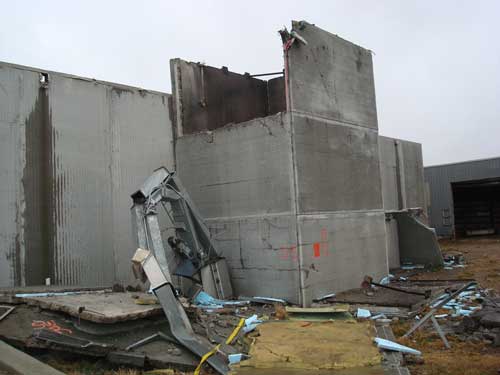
The October 25, 2010 catastrophic dust explosion at the Pinskdrev chipboard facility in Pinsk, Belarus resulting in fourteen fatalities has huge implications amongst the global manufacturing sector. Key findings from the accident investigation determined that prior to the afternoon explosion in the wood pellet area of the chipboard (particleboard) facility there was a history of  numerous fires.


This illustrates very graphically how non-consequential combustible dust related fires can be precursors to catastrophic secondary dust explosions. Currently combustible dust layer fires are  ignored. Where instead primary attention is directed towards more newsworthy dust explosions. This is a disastrous approach in putting the cart before the horse.

In the USA, the Chemical Safety Board (CSB) has completed accident investigations on five catastrophic dust explosions. All the CSB reports note, just as in the Pinksdrev incident, a history of non-consequential combustible dust related fires prior to the catastrophic events. If your facility has a history of non-consequential combustible dust related fires then you have a serious problem analogous to the tip of the iceberg which the passenger ship Titanic struck on her maiden Atlantic crossing. After any such fire it is imperative an accident investigation is undertaken in determining root and contributing cause so as to minimize the probability of the next incident occurring.

From the following excerpts of the Belarus news stories of the Pinskdrev explosion you'll  have to use Google Translate  to read the complete account when translating from Russian to your specific language.Copy and paste the URL into the Google Translate box for language translation. Special thanks to Vecherniy Brest (Вечерний Брест; Evening Brest) and Naviny.by. Belarusian News in their excellent news coverage which provided the opportunity to share the events with the global safety community. 
   

High Levels of Dust (NFPA 664)
Court proceedings discovery: "about a week before the events wall fan was turned off."
At this company repeatedly (in January, February, March, May, June and July 2010) had fire and sparking in the  mill site during the production of wood pellets, where always there was an increased level of dust. "According to the Prosecution," the requirements for equipment installation room automatic fire and automatic fire alarm was suppose to be made ​​in ... 2000. In addition, "the JV" Pinskdrev-DSP "willfully, without appropriate approvals of the Medical Service and Fire Department, installed a second production line for wood pellets.
Prior Combustible Dust Related Fires

"The audit found that the fire occurred in the enterprise before. Sometimes, that is not duly registered in the departmental professional fire protection guard traveled to the extinguishing of the fire up to four times a day. In 2010, the site for the production of wood pellets fire took place on 8 and 30 June, and October 13 - 12 days before the tragedy".
"These facts were hidden from Pinsk city Department of Emergency and were not counted as fires. Information about them from the workforce and the population in the MOE also been reported. And this despite the fact the enterprise is highly explosive.  For example, in May 11, 1997 because of the high concentration of dust in the room of the main building there was a dust explosion, accompanied by fire."
 Prerequisites in the incident, apparently accumulated over a long time. The same Prosecutor General Grigory Vasilevich , visiting the site of tragedy in November 2010, said that "the company revealed serious violations of process discipline and safety rules were not complied with health standards. Repeatedly fires, which are eliminated on their own. " This was the warning calls future tragedy, says Grigory Vasilevich, but the responsibility for the safety of people officers ignored them"
This is the exact same problem here in the USA with the repeated combustible dust fires which are mostly non-consequential and extinguished in the incipient stage without any follow-up investigation of root and contributing cause,. Prior non-consequential combustible dust related fires have the potential escalating into catastrophic dust explosions.

Magnetic Separators

"The investigation of the accident revealed that during operation  fire safety rules  were violated. Above the conveyor feed hopper in front of the hammer mill and in itself is not installed iron catcher (magnets), which paved the way for the entry into the equipment of metal objects and sparks of mechanical origin, which could be a source of ignition of an explosive dust air mixture."
Explosion Venting (NFPA 68)

"Nor were installed devices that provide fire and explosion hazard shedding dust and gas mixtures and gases in the event of an explosive tank valve hammer mill was prevented delivery fire and explosion hazard and gas mixtures through the safety valves and blow-off line manual bleed into the production room. Wood dust collection system placed directly in the room area."
Inadequate Local Exhaust Ventilation

"In addition, due to the fact that the primary hammer mill did not provide load two pelleting presses, in October 2010, it was replaced by the more powerful. After mounting between it and discharge hopper formed unclosed space through which the room area ejected wood dust and crushed chips, leading to a dusty room"

History North America Particleboard Combustible Dust Incidents
  
Two Injured, Explosion and fire at particle board plant in Smithers, BC (2008)


Explosion and fire at particleboard factory kill two, injures 8
, Pennsylvania
(Feb. 2001)“The fire was contained in a silo that abuts the plant, McKean County emergency management director Ken Mostyn said. A dust collection system that runs along the plant's roof and feeds the silo was heavily damaged, he said. Authorities said fire spread through sawdust piles in the building and quickly overwhelmed Temple-Inland's on-site fire brigade.”
OSHA issued three willful violations, with a proposed penalty of $189,000 and 16 serious violations with a penalty of $59,400.
"The alleged willful violations address the company failure to prevent excessive accumulations of wood dust, failure to shut down a conveyor that carried sparks to other combustibles and unapproved electrical service in restricted areas," said John Stranahan, area director of the Erie OSHA office. "Wood dust is recognized as the single greatest hazard for fire and explosion in the particleboard manufacturing industry." “Dust levels throughout portions of the plant were documented in some locations between four and six inches. The National Fire Protection Association recommends that wood dust not exceed one-eight of an inch.”
Conclusion
Hopefully sharing the tragic account of the Pinskdrev Belarus incident in addition to the history of prior particleboard facility incidents in North America will assist stakeholders in understanding combustible dust fires and explosions is a global hazard. Robust engineering controls incorporated into local exhaust ventilation will ensure dust layers are minimized. When processing wood it is essential magnetic separators are installed upstream so as to prevent foreign materials from providing an ignition source downstream. Addressing the combustible dust related fires(fire triangle) immediately in determining root and contributing cause will ensure the unwelcome fire triangle will never have a chance to visit a facility.


 

Sunday, November 18, 2012

Firefighter Injuries Unacceptable Combating Combustible Dust Related Fires

Recent firefighter injuries such as fighting a combustible dust related fire at plastics material and resin manufacturing are unacceptable. This brings back dark memories of the 1993 fire and catastrophic dust explosion at a wood fiber facility in Langerak, Netherlands resulting in 2 firefighter fatalities and 10 firefighter injuries. A question arises whether firefighters should be afforded the same workplace protection as workers in the private sector noted in the OSHA regulations?

State and local government agencies such as the Monroe Fire Department are not subject to the regulations established by Federal OSHA. For instance, Section 3(5) of the Occupational Safety and Health Act of 1970 (the Act) specifically excludes the employees of State and local government from coverage under Federal OSHA. This does present a huge problem where a failure to assess and identity combustible dust fire and explosion hazards can have severe consequences.

“While attempting to extinguish the fire, Centers said “there was a dust explosion” that caused the three injuries. He said firefighters were attempting to remove the material, which was through a 2-1/2-inch pipe at the bottom of the tank. “Dust that was created while they were pulling the dry material out found an ignition source and ignited,” he said.” Bridging and Rat-holing come to mind? What do you think?
In contrast, the OSHA General Duty Clause is applicable to practically any fire-fighting operation where combustible dust fire and explosion hazards are present. Fire Departments are required to identify the combustible dust hazards that firefighters may be exposed to. This can be implemented by providing firefighters the necessary standard operating procedures, combustible dust training, and equipment to safely mitigate the hazard.

The OSH Act is not all inclusive of the 26 States currently authorized by OSHA to run their own safety and health programs (OSHA State-Plan states), enforcing OSHA regulations that apply to both public and private employees in state-plan states.  Additionally, “NFPA recommends that all fire departments establish a policy of providing and operating with "the highest possible levels of safety and health for all members" [NFPA 1992]. Several NFPA standards apply to fire-fighting operations such as NFPA 1500 specifying the minimum requirements for a fire department's occupational safety and health program.

Typical Fire with Combustible Dust?
Questions arise in whether fire departments do have the necessary training in understanding combustible dust fire and explosion hazards while combating combustible dust related fires? For example, in a recent news report a fire chief mentioned the fire at the plastics material and resin manufacturing “was typical of all fires(01:20) video.

Since when is a combustible dust related fire typical? Especially when it has the explosive severity and severity of consequence of a flammable gas or vapor?
This post is in no way is meant to discredit the fire service, fire chief’s, and brave firefighters risking their lives everyday protecting life and property. It is solely to bring the subject to the table where the fire service must be welcomed to join in the current OSHA Combustible Dust Rulemaking process which must also include education, outreach, and training for all stakeholders and not just a select few. At the 2011 OSHA Combustible Dust Expert Forum held in Washington, D.C. not one member from the fire service was invited.
"Houston, we've had a problem".

Learning from Prior Incidents
Similar incident Feb. 2012 at Advanced Environmental Recycling Technologies (AERT), no one was injured in the blast. Dust explosion at Arkansas facility that recycles polyethylene plastic and waste wood fiber in the manufacturing of windows, doors, and decking. AERT wood composite MSDS

Responding to any combustible dust related fire is not a "typical fire." All that is needed to complete the explosion pentagon (fire triangle on steroids) is suspension and confinement. Dust suspension alone can also occur. When extinguishing this type of Class A fire, extreme care needs to be taken. For example, since a direct stream of water into the pile from a fire hose could cause the burning or smoldering material to become airborne resulting in a catastrophic flash fire or even spreading the fire to other areas. Source: Handbook of Industrial Loss Prevention, 1967, Factory Mutual Engineering Corporation, McGraw-Hill Book Company New York, NY.

In Langerak, Netherlands (1993) "firefighters responded to a small fire in a wood fiber processing plant where unexpectedly an explosive spread of fire occurred. As a result, eventually three persons, including two firefighters, deceased and fourteen individuals, most of them firefighters were injured. The fire from the beginning was initially believed to be a fire without special risks."
 

Theres a wealth of scientific and layman literature on the physicochemical properties on combustible dust. The missing link is the practical aspects and hazards of combating a combustible dust related fire,. Such as the example above in caution using a hard stream of water from a hose or a avoiding pressured burst from a fire extinguisher. Then there is the bridging (arching) and ratholing hazards in overhaul of bulk storage enclosures (silios, bins, etc). The list goes on in practical aspects...


Near-Miss Accident Reporting
Reviewing lessons-learned from ComDust incidents on the National Fire Fighter Near-Miss Reporting System site it appears many in fire service management believe the primary consideration is PPE. How about lessons-learned in preventing envelopment by a raging fireball in the first place?

Dec. 21, 2007 "The lieutenant reported that workers were on the scene and that the fire "appeared to be extinguished". The lieutenant and a firefighter stretched a 1 3/4" attack line to an elevated platform approximately 15' from the ground to a hatch on the side of the silo. Once the line was charged the lieutenant opened the hatch and immediately heard a loud roaring sound followed by a flash fire erupting form the hatch opening engulfing the lieutenant."
Hold on the story gets even more interesting...

"The second engine arrived and was given the suppression assignment. The charged hoseline from the first engine was still in place so they utilized it. The second crew was not aware of the events that had taken place, only that the lieutenant was down. Once on the landing, the second lieutenant opened the hatch and again a loud roaring noise followed by a flash fire and explosion occurred engulfing the second Lieutenant and firefighter." Years of fire service experience: 24 - 26, Region: FEMA Region III
We cannot continue to ignore the combustible dust related fires anymore. How many more firefighter fatalities and injuries as a result of combating combustible dust related fires and explosions must occur before it is no longer acceptable?

Resources:
One Firefighter Fatality; Eight Injured WI, NIOSH Accident Report
Seven Firefighters Injured CA Facility, NIOSH Accident Report
Example Fire Department Training Program Compliance with OSHA Regs.
OSHA Combustible Dust Expert Forum, Washington, D.C, (2011)
Composite and PVC Decking 

Tuesday, November 13, 2012

The CSB Investigating Printing Ink Manufacturing Catastrophic Explosion

Currently the U.S. Chemical Safety Board is investigating the October, 9, 2012 catastrophic explosion at a East Rutherford, NJ printing ink manufacturer resulting in three workers  hospitalized.  In a recent news account according to Daniel Horowitz, Managing Director of CSB,  "will be looking for anything that could have caused an undue amount of dust to accumulate," 

Printing inks are made of four basic components
:
Pigments - to color the ink and make it opaque (i.e. carbon black, etc)
Resins - which bind the ink together into a film and bind it to the printed surface
Solvents - to make the ink flow so that it can be transferred to the printing surface
Additives - which alter the physical properties of the ink to suit different situations

Credit: BRANCHER,
Tremblay-les-Villages
France
One of the main ingredients is the carbon black  used as a pigment in the printing ink manufacturing process. No information has been released yet whether or not carbon black was the root fuel source in the incident occurring in the facility pre-mix room. CSB investigators have collected dust samples for lab testing to determine the combustibility of the dust.

Industry Safety Guideline: Carbon black does not pose an explosion risk?


"There has been no recorded industry experience to suggest that carbon black dust concentrations pose an explosion hazard" International Carbon Black Association (ICBA) (page 8 .pdf) In contrast, according to a recent news account, "...carbon compound ignited, causing an explosion and a fire in ductwork ..." Will this incident be a wake-up call for industry  handling and processing carbon black to reevaluate their fire and explosion risks? 

Recognizing dust explosion hazards of carbon black appears to be a global problem. For example, on the governmental agency web page for the Canadian Centre for Occupational Health and Safety (CCOHS) there is an alarming  statement  noting carbon black is not a dust explosion hazard. 

"In general, pure carbon black is difficult to ignite, does not undergo spontaneous combustion, and is not a dust explosion hazard."
Yet also conflicting info on the same CCOHS web page where carbon black is a dust explosion hazard
"Dust explosions may occur if the oil content exceeds 13% (MINIMUM CLOUD IGNITION TEMPERATURE reported as 730 deg C). If air concentrations exceed 50 or 60 g/m3, carbon black may explode in the presence of a high energy ignition source, such as a gas explosion."
In contrast the explosive properties of carbon black is recognized in this  MSDS Specialty Carbon Blacks used in the printing inks market .PHYSICAL AND CHEMICAL PROPERTIES (page 6 .pdf) MEC: 50 g/m^3, Dust Explosion Classification: ST 1 (VDI 2263), Pmax: 10 bar at an initial starting pressure of 1 bar. Higher starting initial pressures will yield higher explosion pressures. Maximum Rate of Pressure Rise: 30 - 400 bar/sec, Method: VDI 2263 and ASTM E1226-88 Another helpful MSDS Carbon Black "Thermal Carbon Black"- Cancarb Limited-Explosive Properties: http://www.cancarb.com/pdf3/MSDS_English.pdf (page 7 .pdf) Revised Date: November 30, 2011
  
The story gets more interesting with October 4, 1999, Titan Tire Corporation accident "While running a batch of stock, a mixer ejected a large cloud of carbon black dust into the work area and up to the ceiling of the building. The dust ignited, causing a large flash fire that seriously burned two employees"

 "Respondent relies on a publication by the Canadian Centre for Occupational Health and Safety (Exh. R-1). This is a document apparently taken from the internet that indicates that dust explosions may occur if oil content exceeds 13 percent and that carbon blacks with over 8 percent volatiles may be an explosion hazard. "

"Respondent's employees testified that the oil content was less than 6 percent by weight, but did not address the other ignitable chemicals. It presented no evidence about the four other ignitable or volatile substances in the carbon black. Knowing it had 6 percent oil content in the mixture, along with other ignitible substances, respondent should have taken reasonably diligent steps to assure that total volatiles did not exceed 8 percent or, alternatively, that its electrical equipment, fixtures and outlets in the #1 Banbury mixer area were approved for a Class II, Division 2 location."

In addition to volatile percentage it is extremely important to identify and evaluate additional ignitable substances also part of the chemical composition of carbon black. Seems industry is still having carbon black fires and explosions solely relying on outdated safety guidelines that doesn't provide comprehensive hazard communication as noted in the ICBA and CCOHS content.


CSB has investigated explosions at printing ink manufacturing facilities in the past.  For example, completed CSB Investigation of a printing ink and paint manufacturing facility at CAI / Arnel >> Chemical Plant Explosion, Danvers, MA, November 22, 2006 INVESTIGATION REPORT, MAY 2008, CONFINED VAPOR CLOUD EXPLOSION (10 Injured, and 24 Houses and Six Businesses Destroyed)  Interesting, nitrocellulose used in the CAI printing ink manufacturing process. More uses for nitrocellulose than just smokeless powder (guncotton) (:

Why carbon black is not recognized as a combustible dust by many stakeholders?
 "Carbon black presents a fire rather than a dust explosion hazard. None of the 19 samples were ignited by the electric spark source; all but sample 73 ignited in the furnace." U.S. Dept. of the Interior, Bureau of Mines, 1965
"Pressure and rates of pressure rise developed by a dust explosion are determined in a closed steel Hartmann tube. Ignition of the dust cloud is normally produced by a 24-watt continuous spark source. For dusts that ignite with difficulty, the heated coil or gun cotton source is tried." Laboratory equipment and test procedures for evaluating explosibility of dusts. U.S. Dept. of the Interior, Bureau of Mines, 1960

So should dusts not ignited by an electric spark source in a closed steel Hartmann tube a half a century ago still “not” be considered a combustible dust in a 21st century hazard assessment? Interesting all the industrial carbon blacks (acetylene black, channel black, lamp black, furnace black, and thermal black) have the same CAS 1333-86-4.
"CAS Numbers are not related to chemistry. A CAS Number has no inherent meaning but is assigned in sequential, increasing order when the substance is identified by CAS scientists for inclusion in the CAS REGISTRY database." "The lowest numeric CAS registry number is 50-00-0 corresponding to formaldehyde. Thus formaldehyde was potentially the first compound to receive a CAS registry number"
Users of MSDS's beware in solely relying on CAS registry numbers as this does not provide comprehensive ignition sensitivity and explosive severity data in assessing fire and explosion risks of the different types of carbon black produced by partial combustion or thermal decomposition of gaseous or liquid hydrocarbons.

Volatile printing ink solvents + combustible dust = hybrid mixture?

CSB US Ink catastrophic explosion investigation. 
 
"Horowitz said it's too early to know if carbon black dust fueled the explosion, adding investigators also are looking at a resin binder — a filmy adhesive — present in the area."

Primary chemical components in the manufacturing of printing ink in addition to carbon blacks (pigments) and resins (vehicle or varnish) include additives and solvent. Examples of solvents include mineral oil, other aliphatic and aromatic hydrocarbons, ketones, esters, and alcohols.  So what is the probability of occurrence in developing hybrid mixtures in the printing ink manufacturing process?

Conclusion

CSB investigators have their work cut out for them in determining root and contributing cause as a result of their key findings. The process becomes very intriguing in determining root fuel sources with the  potential explosive atmospheres generated from solid and liquid ingredients in manufacturing printing ink with a myriad of permutations depending on the specific ink processed in the pre-mix room.

Hopefully this discussion will provide insight on the combustibility of carbon black processed and handled in all sectors. If combustible dust is found to be involved in ignition it will put a new face on the OSHA Combustible Dust National Emphasis Program (NEP) that doesn't recognize printing ink manufacturing NAICS 325910 as having a potential for combustible dust related incidents. This could be reminiscent of the Hoeganaes CSB Case Study where CSB recommended:

"Revise the Combustible Dust National Emphasis Program (NEP) to add industry codes for facilities that generate metal dusts (e.g., North American Industrial Classification System, NAICS, code 331111 Iron and Steel Mills, and other applicable codes not currently listed). Send notification letters to all facilities nationwide under these codes to inform them of the hazards of combustible metal dusts and NEP coverage."
Resources:
What is Ink? (US Ink)
How is News Ink Manufactured (US Ink)
Printing Ink Technology and Manufacture (New Zealand Institute of Chemistry)
Ink Mixing, Pre-Dispersing, Grinding, etc. (Netzsch)

Two Injured Combustible Dust Related Fire in California

Combustible dust related fire in a sawdust hopper area of origin at a NAICS: 321212 Softwood Veneer and Plywood Manufacturing facility in California resulting in two injuries. Ironically the OSHA Combustible Dust National Emphasis Program (Reissued) does not recognize Softwood Veneer and Plywood Manufacturing facilities as having a potential for Combustible Dust Explosions/Fires in Appendix D-1 nor D-2 of the NEP.

With the commonality of hoppers throughout all manufacturing sectors having combustible dust fire and explosion hazards it is time OSHA comes to the realization that the ComDust NEP is ineffective in providing stakeholders a proactive awareness of combustible dust workplace hazards. Wouldn't it be prudent for OSHA to revise the current static ComDust NEP document in accordance with reality? Solely targeting specific processes while ignoring others is not the answer as we see in this unfortunate incident and many other countless NAICS Non-NEP fires and explosions. Time is way overdue in providing much needed awareness, outreach, and education throughout the entire gamut of the industrial sector.

These combustible dust related fires are a regular occurrence in the manufacturing and non-manufacturing sectors globally. In most instances they are non-consequential with no fatalities, injuries, or property damage. Best industry practice in minimizing the probability and severity of future incidents can be found in the recently revised edition of NFPA 664

Tactical Height Problems Fighting Grain Elevator Fires


Would it be cost effective to have standpipes and fire-fighting hose stations located in grain elevators where fire service aerial trucks cannot reach? NFPA 14. Standard for the Installation of Standpipe and Hose Systems.
"It was a very difficult fire to fight." said Sedgwick County Deputy Fire Marshal Clint Reed. "The top of the bins were 120 feet in the air so we had to use aerial devices and then hoist hose the rest of the way up with rope." 
 Example with diagram of a grain elevator.

" Logistical nightmare" KSN News TV Video "One man with potentially serious injuries was hospitalized at the burn unit of Via Christi Hospital'. Hats off and a salute to the hard working fire-fighting teams of the Sedgwick County and the Wichita Fire Departments in responding to this incident.

NFPA 61 2013 Edition  Important new revision in Chapter 12 regarding standpipes.Chapter 12 Building Fire Protection.

 "12.4.2 Wet or dry standpipes shall be provided to all operating areas of head houses, processing structures with operating areas, and grain bin galleries located 15 meter (50ft) above grade. "


 Berthold Farmers Elevator Fire in Carpio, ND: Tactical Height Problems (October 2012) "The problems that fire crews faced was getting water to the top of the elevator to try and extinguish the flames. In the end, all that could be done was to watch and wait." "One of the initial difficulties was simply getting up to the fire. ."

"They finally managed to get a crane on site Tuesday to get some hoses up to the top and put water on the fire. Without the crane, Kalvin Myers, chief of the Carpio Fire Department, said there was no way to get hoses up to the top. "It gets a lot of weight in that hose to carry it up that far - 160 feet," Myers said."
 Grain Elevator Fire, Mt Joy, PA Oct 07, 2011
"Paul Paulsen, Mount Joy Fire Company assistant chief said the height of the building and the multiple floors posed challenges to the crews inside as they lugged ladders, axes, hoses and other equipment up the stairwells to battle the blaze."

Now that's what I'm talking about! Renfrew Fire Departments 75' aerial ladder truck is busy at the scene of a fire at Box Grain Elevators Renfrew, Ontario, Canada  (Dec 22, 2011)

McClusky Grain Elevator Burns Down McClusky, ND (8/4/2010)

"Our department doesn`t have any equipment to fight fire when it`s up that high. Neighboring departments have cannons on there, come in and get the top and knock down the fire," explained McClusky Fire Chief Wayne Dockter. 

Modern Transport Winona, MN Bucket Elevator Fire (December 18, 2009)
"To douse the flames, firefighter Duane Chadbourn was hoisted from a ladder truck 105 feet in the air. The ladder was fully extended, Assistant Winona Fire Chief Jim Multhaup said."

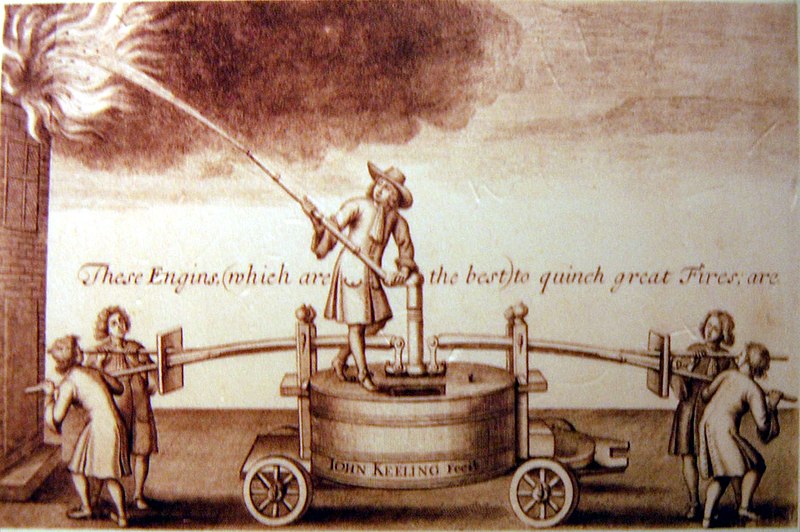
Back in the day...Aerial Ladder, Calgary Fire Department (1906 or after) 


Maybe an alternate solution to standpipes would be?:
"the cask and pail installation is sometimes classed as the Miller's greatest protection against fire, and nearly all mills have them on the whole, they are well maintained."

For example,  

"barrels of water to be distributed throughout the plant at intervals of about 50 feet supplemented by non freezing fire extinguishers to reach high places, such as elevator head, shafting, tighteners, idlers, etc., where a pail of water cannot be thrown with any degree of accuracy when especially in high ceilings"

Hazards of Grain Elevators by G. W. Cloidt, H. B. Maguire, C. H. Roberts , Armour Institute of Technology (1917)

Interesting viewpoint where closely after the turn of the 20th Century observation. "Practically, standpipe systems in grain elevators are nearly useless. No doubt they look protective and some millers favor them but, even when properly installed and maintained, they are of little value. The standpipe in grain elevators is an indirect method i, e., one man cannot handle the system alone, because the standpipes themselves due to low temperature, must be dry, with valves, mains or pumps in the boiler room etc."

"In this condition, the standpipe system is being set into operative condition, the fire is gaining headway so as to drive out the man or man about to hold hose. The hose is usually neglected and liable to burst as soon as pressure is applied. They usually require more than one man for the play pipe work and, employees seldom risk their lives to save the property in this manner."

NIOSH Accident Report Catastrophic Coal Storage Silo Explosion

"Do not use water or traditional fire fighting foam; however, micelle encapsulator fire extinguishing agent, such as F-500, should be used. NFPA 1620, Standard for Pre-Incident Planning can be used to establish a pre-incident plan for silos within their jurisdiction so as to minimize the risk to emergency responders" NIOSH Accident Report 

Coal storage silo after explosion
(NIOSH photo)


Excellent job NIOSH sharing this educational accident report with the public providing valuable seven recommendations This will assist immensely in minimizing the severity of future combustible dust related accidents. CDPI encourages additional items in future recommendations regarding fire service emergency response to combustible dust related incidents throughout the manufacturing and non-manufacturing sectors:


Item #1:
Fire departments should review, revise and enforce standard operating guidelines (SOGs) for structural fire fighting addressing responding to all combustible dust related incidents.

Item #2 Fire departments should train officers and fire fighters on the hazards associated with different types of processes handling and processing combustible particulate solids (CPS) and the appropriate fire fighting tactics.

Item #3: Fire departments should ensure that pre-emergency planning is completed for all processes handling and processing combustible particulate solids (CPS) within fire department jurisdictions. For example, a topic not yet addressed in NFPA 1620 Chapter 8.4, Special Hazard Considerations –combustible dust.

Item #4: Fire departments should ensure that a separate Incident Safety Officer, independent from the Incident Commander, is appointed at each structure fire and is knowledgeable of combustible dust related fire and explosion hazards.

Item #5: Municipalities should consider requiring that placards with hazard warnings and appropriate fire fighting guidelines be placed on buildings, bulk storage enclosures, air material separators, or other process equipment where the is a danger of a combustible dust deflagrations. Example: Hazard Warning Sign - Danger Explosive atmosphere

It is essential the fire service be acknowledged as a valuable and essential stakeholder in addressing combustible dust related fire and explosion workplace hazards. NIOSH and OSHA must work in a collaborative nature which must welcome the inclusion of the US Fire Administration. 


On the other side of the coin the NIOSH accident report missed the boat when not including all high risk occupancies that handle, manufacture, process, combustible particulate solids. Solely limiting the recommendations to silos ignores the big picture of combustible dust related fire and explosion hazards the fire service is exposed to on a daily basis.

For example, over 70% of the recommendations in this recent NIOSH report were copied and pasted from an earlier accident report " Volunteer Assistant Fire Chief Dies at a 2010 Silo Fire/Explosion - New York" It is this type of future NIOSH recommendation that will finally include the fire service as a vital stakeholder in the current OSHA combustible dust rulemaking process. Do we have to wait for another firefighter fatality to finally get it right?


Examples of prior combustible dust related incidents with firefighter injuries:

Firefighter suffers second-degree burns battling blaze at facility in  Monroe, OH (May 2012)  "While attempting to extinguish the fire, Fire Chief John Centers said “there was a dust explosion” that caused the three injuries.""

Three firefighters injured after fire at Lumber mill  in Gaston August 2011 "Firefighters were mopping up a fire that started in a powerhouse at the  Lumber mill when a pipe exploded on a walkway, injuring them. "

BURNSVILLE, Minn. Explosion at Black Dog powerplant injures firefighters (August 2010)
  "An Xcel spokesperson says the incident started as a smoldering fire in a coal hopper Firefighters were called, and were working the blaze when the explosion occurred around

Surgoinsville,TN
firefighter injured in blast a Phipps Bend plant in TN (August 2009) (recycling newspaper to process oil absorbent pads) "a five-year veteran of the department, was standing near a storage bin where firefighters were cleaning up after attempting to extinguish burning fibers which had been ignited by sparks from a grinder, when an unexpected explosion occurred, according to Fire Chief Murlice Carpenter."

Six Stockton, California firefighters slightly hurt in plant explosion (Sept. 2008)  "Five firefighters were just inside the building and one just outside the building on stairs when the explosion occurred. The firefighter on the stairs was the firefighter who suffered the worst of the injuries."

Pella, Iowa (Nov 2005) Two firefighters are recovering today after two explosions company  "As firefighters tried to put out the fire, another explosion took place. " 


Resources: 

NIOSH Fatality Accident Report-fire in coal storage silo 
NIOSH Fire Fighter Fatality Investigation and Prevention Program
Presentation by Tim Merinar & Tom Hales (NIOSH/DSR) entitled "NIOSH Fire Fighter Fatality Investigation and Prevention" at public stakeholder meeting; Adobe PDF file [PDF - 11.5 MB]


Questions, Problems, Feedback? Please send email by clicking this link...Thanks

©Copyright 2008-2012. Combustible Dust Policy Institute
The information in http://dustexplosions.blogspot.com/ is not meant to be a substitute for the Code of Federal Regulations (CFR), Federal Register, and other OSHA documents, which should serve as the primary source of regulatory guidance. The information on this site should not be used in place of appropriate technical or legal advice related to your company's specific circumstances. Combustible Dust Policy Institute tries to provide quality information, but we make no claims, promises or guarantees about the accuracy, completeness, or adequacy of the information contained in or linked to this web site and its associated sites. Combustible Dust Policy Institute has no liability arising from or relating to the use, interpretation, or application of the information or its accuracy or inaccuracy. Copyright notice: All materials in this site are copyrighted by the Combustible Dust Policy Institute. No materials may be directly or indirectly published, posted to Internet and intranet distribution channels, broadcast, rewritten for broadcast or publication or redistributed in any medium without permission.